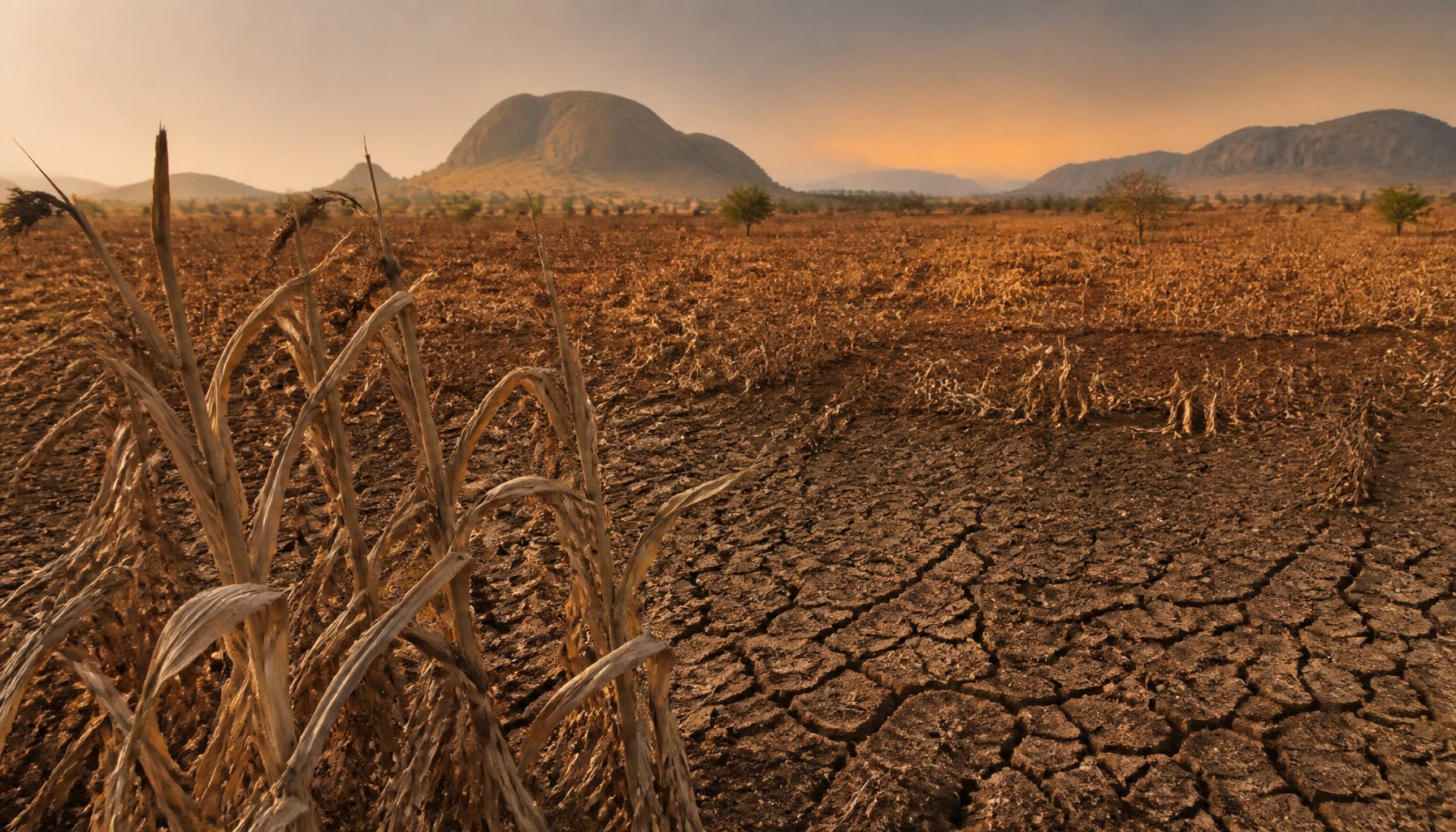
A detailed Madagascar drought update shows that severe rainfall deficits and food insecurity are still affecting the south and south-west of the country in 2026. Despite recent tropical weather, Le Grand Sud remains in a prolonged humanitarian crisis driven by repeated crop failure and water scarcity.
Key takeaways
- Child malnutrition cases have risen dramatically in Androy, highlighting the ongoing humanitarian crisis and food insecurity.
- Dry seasons have led to agricultural failure and displacement from parts of Androy since 2021.
- Recent tropical weather brought flooding in some areas, but did not fix the soil moisture deficit in the south.
- NOAA monitoring continues to flag dryness across Madagascar on short-term rainfall indicators.
The human cost remains severe. In Androy, years of dry conditions have left families with too little food and water, and many people have moved in search of help. Reports from aid groups show the drought has contributed to a worsening humanitarian crisis and persistent food insecurity. Cases of child malnutrition, for example, have risen dramatically.
Relief work is still focused on Southern Madagascar, while some displaced people have moved north towards Antananarivo. Agencies such as the World Food Programme and other international groups continue to support drought response. The scale of the problem shows how agricultural failure in Le Grand Sud can quickly become a wider emergency.
Why recent cyclones haven't ended the water scarcity
To understand how climate change affects Madagascar rainfall, it helps to separate short-lived storm rain from longer dry spells. Tropical systems can bring heavy rain and flooding, but that does not mean farms recover straight away.
In early 2026, Tropical Cyclone Fytia brought heavy rain and flooding to parts of Madagascar, including the northwest and northern areas. That kind of event can damage homes and roads, but it does not fix depleted soil moisture. For comparison, our Cyclone Preparedness guide explains how people can prepare for storms, while the Historical Cyclones page shows how different systems have affected the island over time.
Fast-moving floodwater can also run off hard, dry ground instead of soaking in. That means groundwater and soils can remain low even after a storm. In drought-affected areas, the result is often more damage, not a return to normal farming.
Current weather impacts summary
| Event / Indicator | Primary affected region | Date recorded | Observed impact |
|---|---|---|---|
| Drought and food shortages | Androy, Le Grand Sud | 2021 to present | Displacement, food insecurity and water scarcity |
| Tropical Cyclone Fytia | Parts of northern and central Madagascar | Early 2026 | Heavy rain, flooding and damage |
| NOAA drought monitoring | National scale | 2026 | Dryness still flagged on short-term indicators |
For severe weather, timely Weather Warnings remain important. But warnings alone cannot reverse a multi-season drought. The south still faces a long recovery, especially where crops have failed and water supplies remain low.
Related guides
Further reading and resources
Explore trusted articles, books, videos and other resources to go deeper on this topic.
wmo.intReference
State of Climate in Africa Highlights Water Stress and Hazards
This article details the broader climate context for water stress and hazards in Africa, of which the Madagascar drought is a part.
State of the Global Climate 2025 Extreme Supplement
Provides an in-depth, scientific overview of extreme weather events, including droughts, on a global scale, offering context for the Madagascar situation.
www.un.orgArticle
Africa's progress towards food security - the United Nations
Examines the impact of drought on agricultural production and rural livelihoods in Southern Africa, providing a regional perspective relevant to Madagascar.
action.amnesty.org.auArticle
Madagascar: Join Damisoa's fight for climate-displaced people
Presents a human perspective on climate displacement caused by the drought in Madagascar and calls for action.
wmo.int
www.theguardian.comArticle
Cyclone Fytia in Madagascar kills several people and floods homes
Fytia moved south-east through northern and central Madagascar on Saturday, bringing heavy rainfall, strong winds and rough sea conditions. Average wind speeds ...
reliefweb.intArticle
Disaster & Food Security Early Warning System - World - ReliefWeb
Vegetation and Livestock: Vegetation conditions remain below average across much of Tanzania, Zambia, Malawi, Mozambique, Madagascar, Zimbabwe, southern Angola, ...
www.savethechildren.netArticle
Cases of child malnutrition jump by 50% as drought crisis worsens
Cases of malnutrition among children under five are expected to increase by 54% in Madagascar in coming months, as prolonged dry spells and floods
Planning weeks ahead?
Check Australia's long-range seasonal outlook for rainfall, temperature and the climate drivers (ENSO, IOD, SAM, MJO) shaping the next three months.
View Australia's Seasonal Weather Forecast