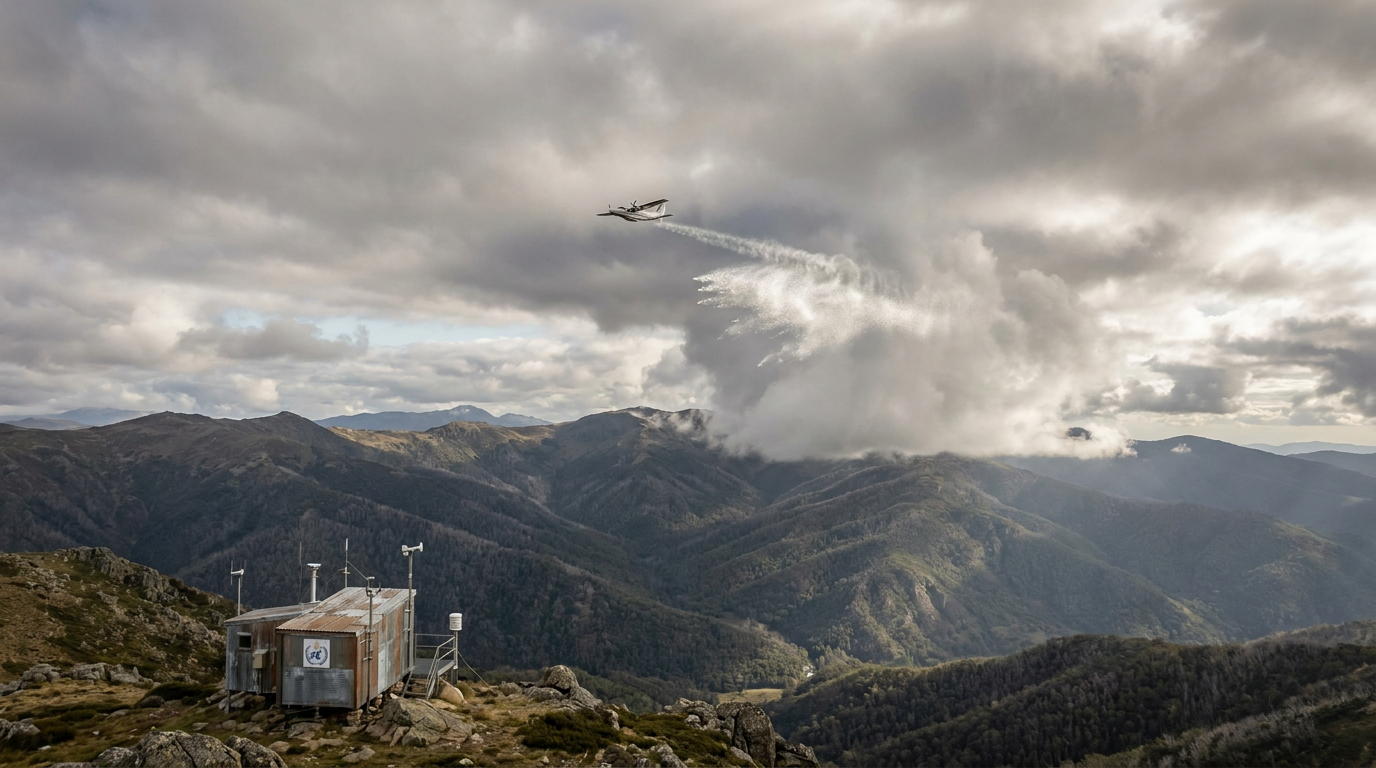
What determines cloud seeding efficacy? Cloud seeding efficacy depends on the presence of existing atmospheric water vapor and specific cloud microphysics to increase precipitation. It is a localized weather modification technique that introduces particles into suitable clouds to encourage rain or snow, rather than a method for creating storms from clear skies.
Key takeaways
Cloud seeding requires pre-existing clouds containing supercooled liquid water to function effectively.
Under optimal conditions, winter mountain cloud seeding can increase local precipitation by five to fifteen percent.
The World Meteorological Organization states that deliberate weather modification cannot end large-scale droughts or stop severe storms.
Silver iodide is commonly used because its crystalline structure closely matches natural ice, promoting rapid ice nucleation.
Scientific evaluation relies on randomized field trials to distinguish artificial precipitation from natural weather variability.
The Physics of Artificial Rain Enhancement
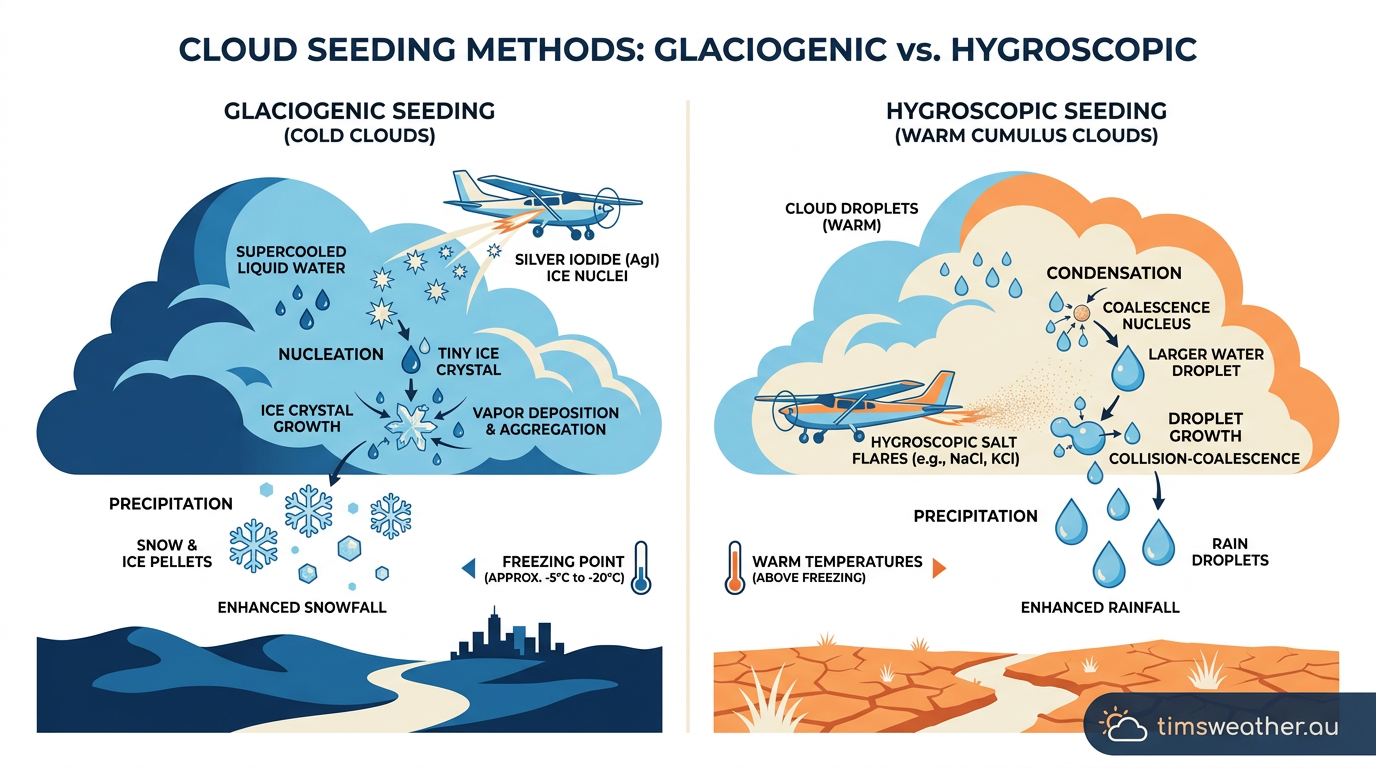
Cloud seeding can only influence clouds that already contain suitable moisture. In cold clouds, particles such as silver iodide encourage supercooled droplets to freeze, helping ice crystals grow until they are heavy enough to fall as snow or melt into rain. Hygroscopic seeding instead uses salt particles to encourage droplets to combine in warm clouds.
Neither method creates a storm or supplies missing water vapour. Temperature, liquid-water content, cloud depth and airflow must already support precipitation, which is why the same seeding method can produce different results from one cloud system to another.

Evaluating Cloud Seeding Efficacy and Results
Cloud seeding is difficult to evaluate because rainfall and snowfall vary naturally over short distances and time periods. Strong studies compare randomly selected seeded and unseeded clouds, then use radar, gauges and snow measurements to test whether any difference is larger than normal weather variability.
Results are therefore expressed as estimated changes with uncertainty rather than a guaranteed amount of extra precipitation. A successful result in one mountain range or cloud type cannot automatically be applied to a different climate, season or storm pattern.
Topography and Regional Weather Conditions
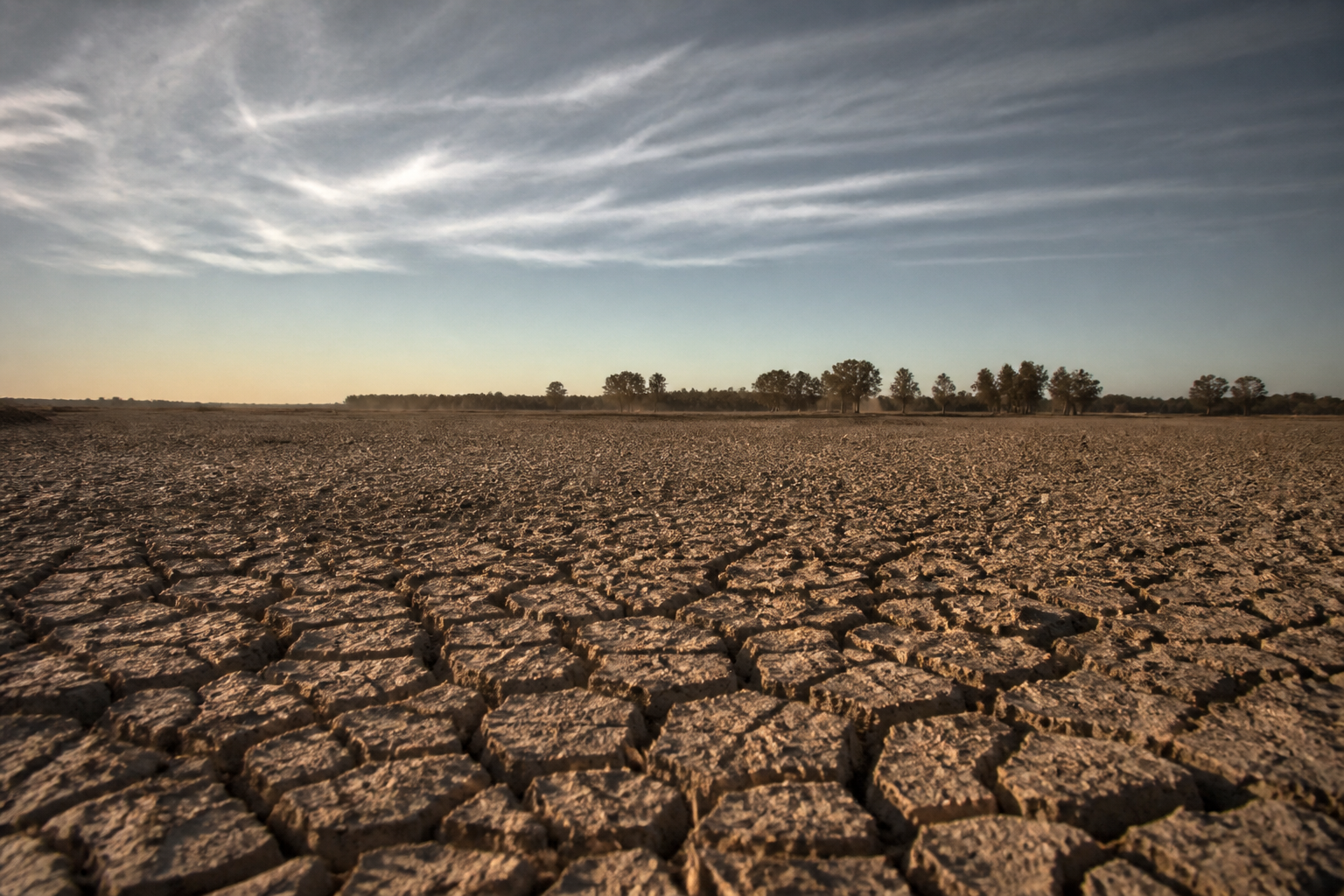
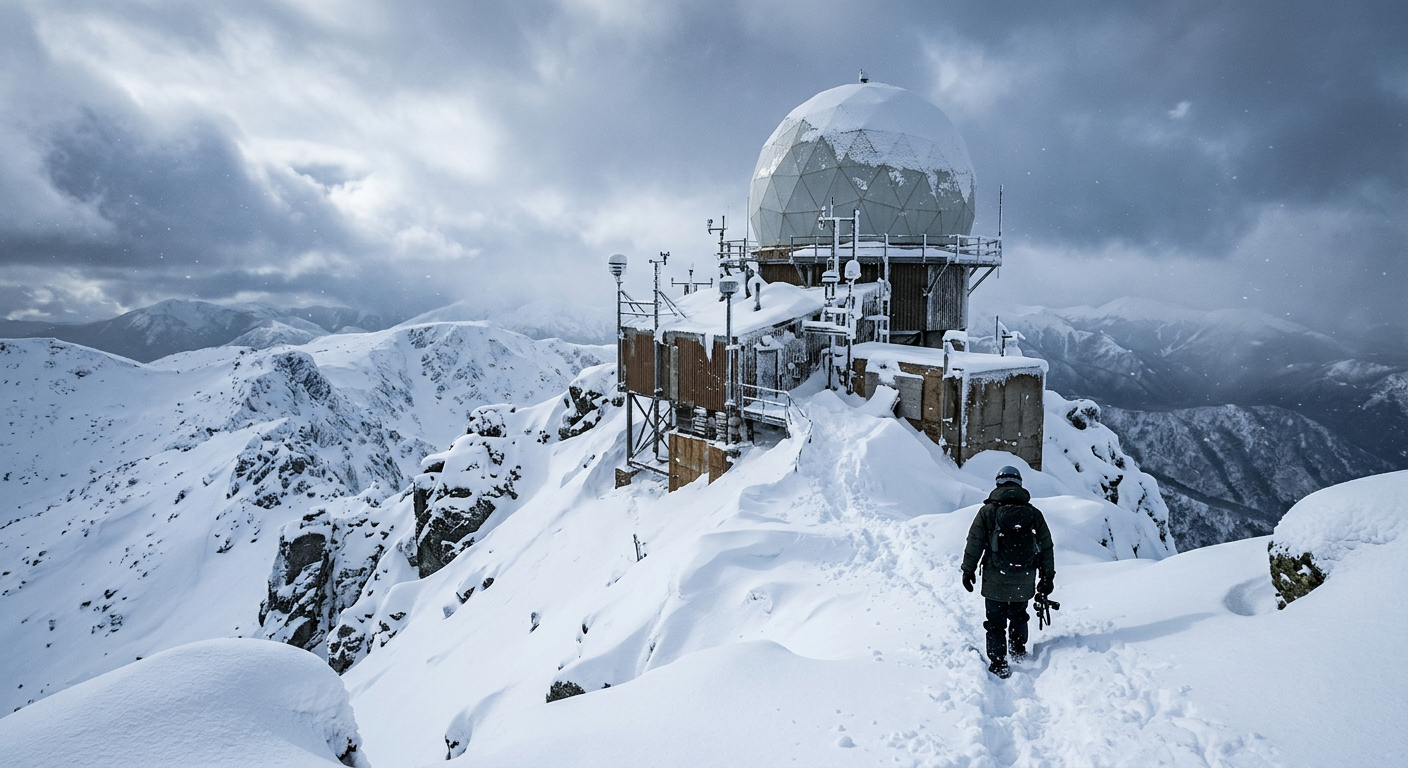
The geographical environment plays a massive role in determining whether weather modification will succeed. Some regions provide the persistent lift and moisture required to make operations cost-effective, while flat, arid regions often lack the necessary atmospheric dynamics.
Regional Variations: Why Mountain Ranges Benefit More than Plains
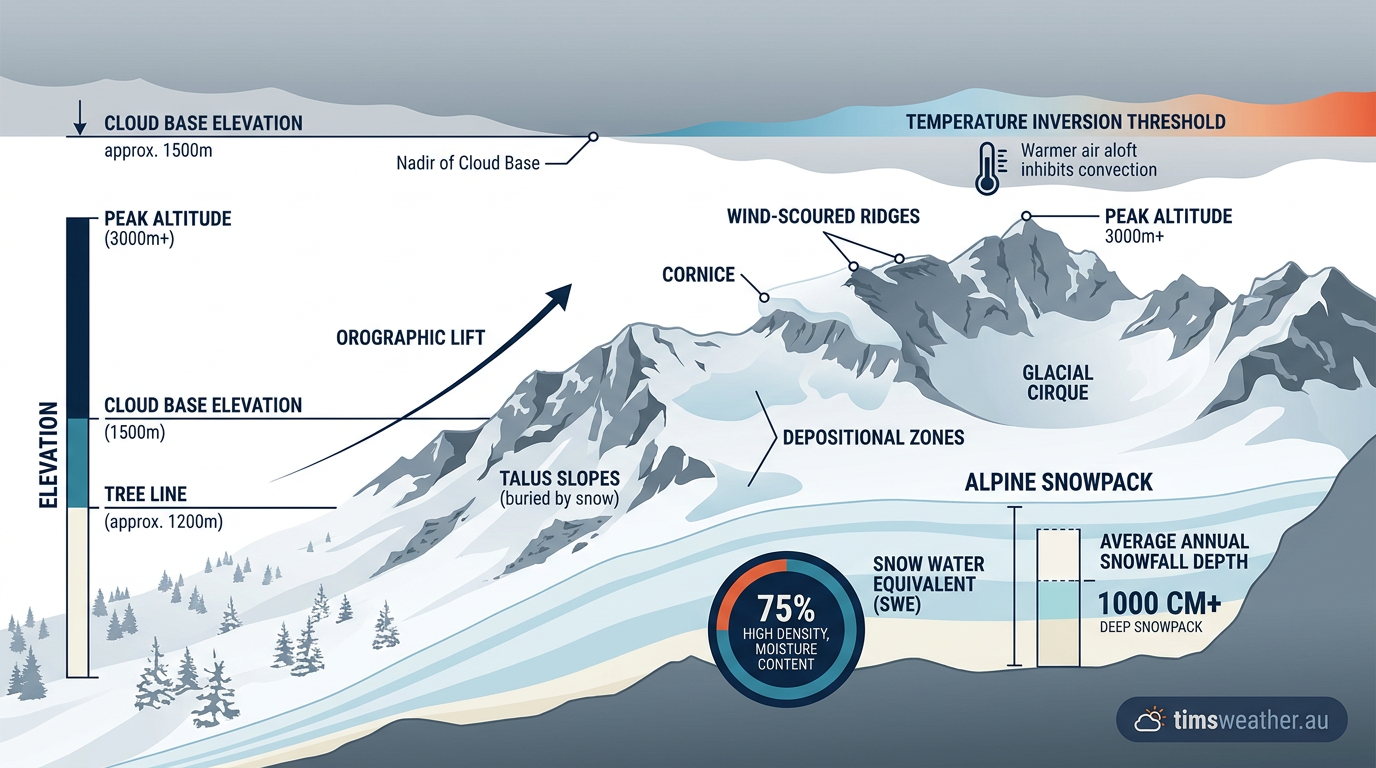
Wintertime orographic cloud seeding is the most reliable application of this technology. When moist air is forced up and over a mountain range, it cools and condenses, providing a steady supply of supercooled liquid water.
This persistent orographic lift creates ideal conditions for silver iodide to initiate continuous ice nucleation. Operational programs rely heavily on this interaction.
For example, the Idaho Department of Water Resources oversees a collaborative program that operates aircraft from November to March and ground-based generators from November to April. By targeting basins like the Wood, Upper Snake, and Payette, these operations aim to steadily build the winter snowpack.
The slow melting of this enhanced snowpack provides critical runoff for agriculture and hydroelectric power during dry summer months. By targeting orographic cumulus clouds anchored over the ranges, meteorologists can ensure the seeding material stays within the most productive part of the storm system for hours at a time.
The Role of Cloud Microphysics in Seeding Success
Even over ideal mountain terrain, the internal temperature of the cloud dictates success. Silver iodide becomes active only at temperatures below -5 degrees Celsius. If a storm is too warm, the seeding material simply washes out as inert particles without initiating any ice formation.
Conversely, if a cloud is too cold (below -25 degrees Celsius), it typically contains abundant natural ice crystals and very little supercooled liquid water. In these extremely cold clouds, adding artificial nuclei has no measurable effect because the available moisture has already frozen naturally.
Ground teams and flight crews must constantly monitor real-time temperature profiles and liquid water content to avoid wasting materials on unsuitable storms. Identifying the correct types of orographic clouds is essential for operations, as a thick, moisture-rich cap cloud will yield better results than a thin, rapidly moving layer.
Addressing Drought Mitigation and Extreme Weather
As global water scarcity increases, public and political interest in weather modification has surged. However, meteorologists frequently have to clarify the thermodynamic realities of the atmosphere to manage public expectations regarding drought relief and storm prevention.
Can cloud seeding stop droughts?
The short answer is no. Cloud seeding cannot stop droughts because droughts are characterized by high pressure systems, sinking air, and a severe lack of atmospheric water vapor. If there are no moisture-laden clouds in the sky, there is nothing to seed.
The United Arab Emirates Cloud Seeding Program conducts frequent flights to target whatever summer convective clouds develop over the desert, but they can only enhance the scarce moisture that naturally appears.
Similarly, the Beijing Weather Modification Office operates extensively to combat agricultural water shortages in agricultural northern regions, yet scientific agencies caution that operations cannot break large-scale climate patterns. Attempting to seed small, isolated clouds during a dry period often results in virga rain over evaporation, where the artificially induced precipitation simply dries up in the arid lower atmosphere before reaching the ground.
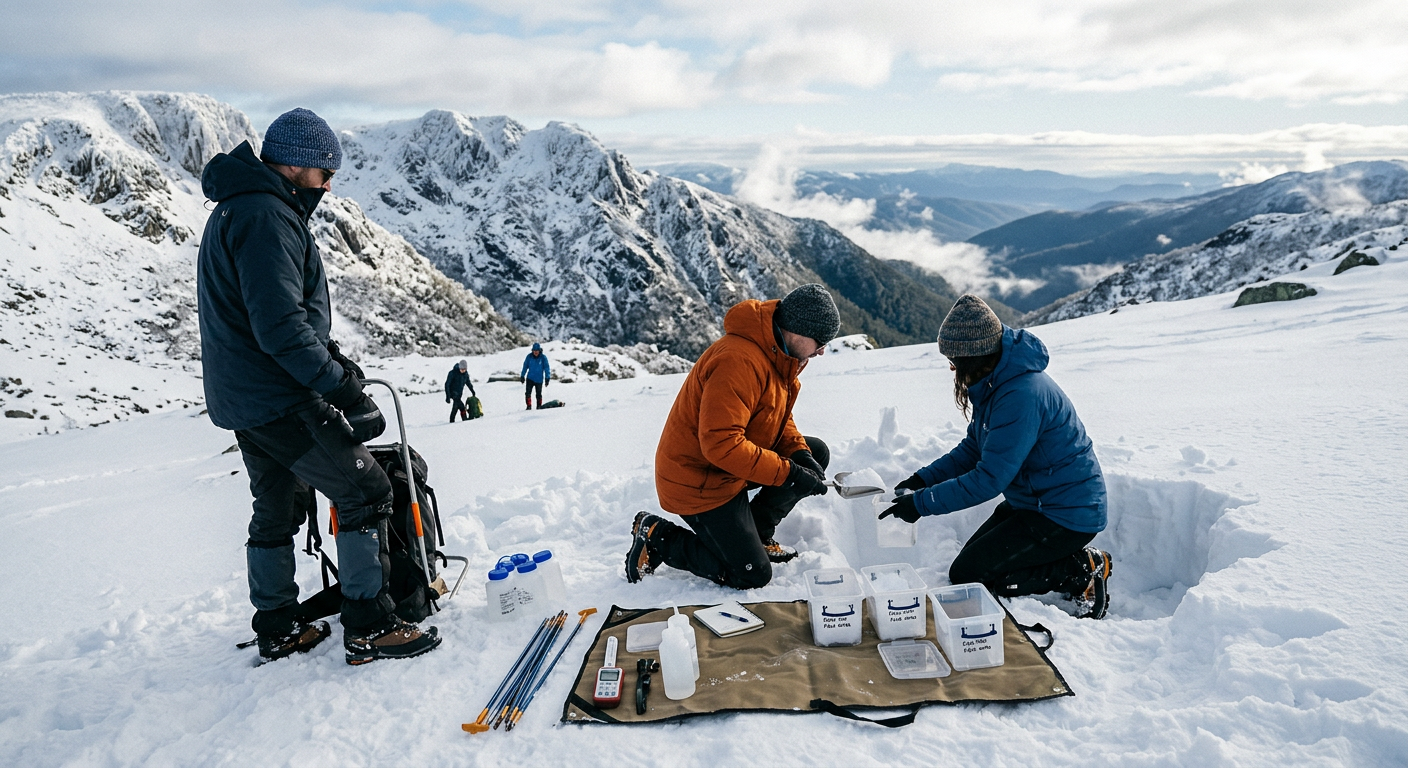
The most effective approach for drought mitigation is using winter seeding to build snowpack during wet years, storing that extra water in reservoirs for future dry periods.

Distinguishing Rainfall Enhancement from Hurricane Mitigation
Another persistent myth is that seeding can disrupt or weaken tropical cyclones. In the 1960s and 1970s, the United States government ran Project Stormfury, an experiment attempting to weaken hurricanes by seeding the clouds just outside the eyewall. The theory suggested that artificial ice formation would create a new outer wall, robbing the inner eye of moisture and reducing maximum wind speeds.
The project was eventually abandoned when meteorologists realized that tropical cyclones contain very little supercooled liquid water, as most of their moisture freezes naturally or is carried away in massive upper-level outflows like how do cirrus clouds form.
More importantly, the latent heat energy released by a mature tropical cyclone is immense, far exceeding any small-scale human intervention. If you understand how does the eye of a hurricane form, it becomes clear that the sheer thermodynamic momentum of a tropical cyclone cannot be reversed by scattering a few hundred kilograms of silver iodide into its outer bands.
Environmental Impacts and Operational Guidelines
The release of chemical compounds into the atmosphere inevitably raises valid questions regarding ecology, water quality, and environmental safety. Decades of operational monitoring have provided a substantial body of evidence regarding the physical impacts of these programs.

Does silver iodide used in cloud seeding harm the environment?
Based on extensive environmental monitoring, the consensus among global meteorological agencies is that current seeding operations do not pose a significant threat to human health or the environment. The World Meteorological Organization supports transparent reporting and periodic review of operational programs, noting that published studies show no significant human-health or ecological impacts from properly managed silver iodide projects.
Silver iodide is virtually insoluble in water, meaning it does not readily break down into biologically active silver ions. When snowpack melts, the silver iodide particles remain trapped in the soil rather than dissolving into the water supply. Water quality testing conducted by agencies like Utah State University consistently shows that silver concentrations in target areas remain well below the strict safety limits established by the Environmental Protection Agency and the World Health Organization.
The concentration of silver in a seeded snowpack is typically measured in parts per trillion, comparable to natural background levels found in ordinary soil.
Legal and Transboundary Conflicts in Weather Modification
Beyond chemical safety, weather modification faces complex legal challenges regarding water ownership and downwind effects. A common public concern is that enhancing rain in one area "steals" moisture that would have fallen in a neighboring region.
Atmospheric physics shows that clouds only drop a small fraction of their total moisture (usually less than 20 percent) as they move across a sector. Modifying a cloud to drop slightly more precipitation in a target area leaves the vast majority of the atmospheric river intact.
However, in regions where water rights are fiercely contested, the perception of moisture theft can cause significant political tension. As highlighted by recent investigations into commercial seeding operations, legal frameworks remain uneven. A lack of international treaties governing atmospheric water rights means that transboundary weather modification relies mostly on mutual cooperation and transparent data sharing between neighboring states.
While deliberate weather modification is a useful, localized tool for agricultural support and snowpack management, it is bound by the strict thermodynamic limits of the natural atmosphere. It offers a modest enhancement of available water resources, but it remains heavily dependent on cooperative weather patterns, exact cloud microphysics, and rigorous scientific oversight.
Sources
Project STORMFURY (aoml.noaa.gov)
Almost Science Fiction: Hurricane Modification and Project STORMFURY - National Weather Service Heritage (vlab.noaa.gov)
HRD History (aoml.noaa.gov)
Hurricane FAQ - NOAA/AOML (aoml.noaa.gov)
70th Anniversary of the first hurricane seeding experiment (aoml.noaa.gov)
NOAA weather and atmospheric science reference (library.oarcloud.noaa.gov)
NOAA weather and atmospheric science reference (library.oarcloud.noaa.gov)
WMO e-Library (library.wmo.int)
Last verified: 2026-09-23
Frequently asked questions
Cloud seeding is a weather modification technique that adds specific particles into existing clouds to help ice crystals or raindrops form. It cannot create clouds or moisture from thin air; instead, it encourages and nudges natural precipitation processes to occur within clouds that are already present in the sky.
Source: wmo.int
Further reading and resources
Explore trusted articles, books, videos and other resources to go deeper on this topic.
earth.orgArticle
Cloud Seeding: Advantages and Disadvantages | Earth.Org
In-depth coverage on Cloud Seeding: What It Can and Can't Do to the Weather from earth.org.
science.orgArticle
Does cloud seeding really work? An experiment above Idaho suggests ...
In-depth coverage on Cloud Seeding: What It Can and Can't Do to the Weather from science.org.
youtube.comVideo
Cloud Seeding Explained in Simple Words - YouTube
Video coverage on Cloud Seeding: What It Can and Can't Do to the Weather from youtube.com.
ametsoc.orgArticle
Planned Weather Modification through Cloud Seeding
In-depth coverage on Cloud Seeding: What It Can and Can't Do to the Weather from ametsoc.org.
thebulletin.orgArticle
Dodging silver bullets: how cloud seeding could go wrong
In-depth coverage on Cloud Seeding: What It Can and Can't Do to the Weather from thebulletin.org.
gao.govReference
Cloud Seeding Technology: Assessing Effectiveness and Other ...
Background reference on Cloud Seeding: What It Can and Can't Do to the Weather from gao.gov.
noaa.govReference
Fact check: Debunking weather modification claims - NOAA
Background reference on Cloud Seeding: What It Can and Can't Do to the Weather from noaa.gov.
letstalkscience.caArticle
What is Cloud Seeding? - Let's Talk Science
In-depth coverage on Cloud Seeding: What It Can and Can't Do to the Weather from letstalkscience.ca.
en.wikipedia.orgReference
Cloud seeding - Wikipedia
Background reference on Cloud Seeding: What It Can and Can't Do to the Weather from en.wikipedia.org.
spectrumlocalnews.comArticle
Cloud-seeding drones: What they can and can't do - Spectrum News
In-depth coverage on Cloud Seeding: What It Can and Can't Do to the Weather from spectrumlocalnews.com.
Planning weeks ahead?
Check Australia's long-range seasonal outlook for rainfall, temperature and the climate drivers (ENSO, IOD, SAM, MJO) shaping the next three months.
View Australia's Seasonal Weather Forecast