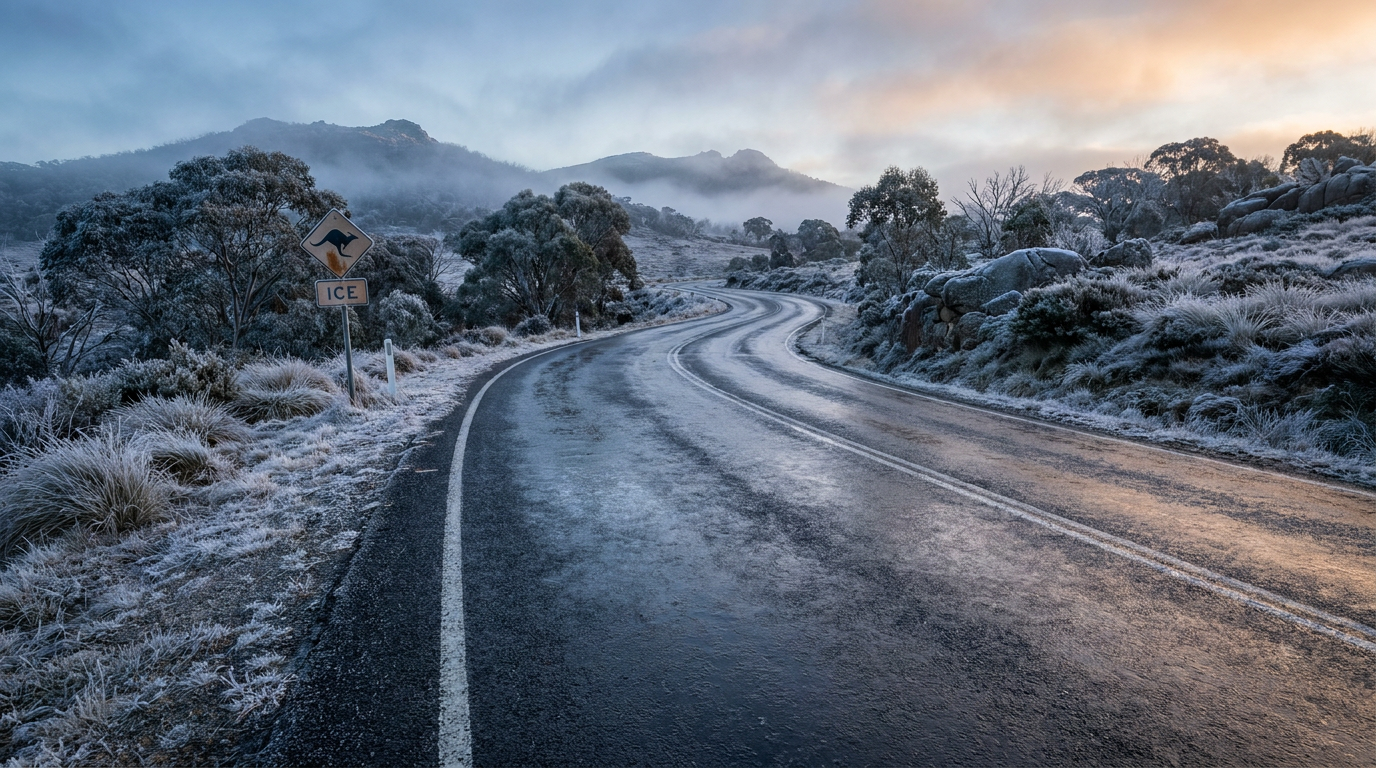
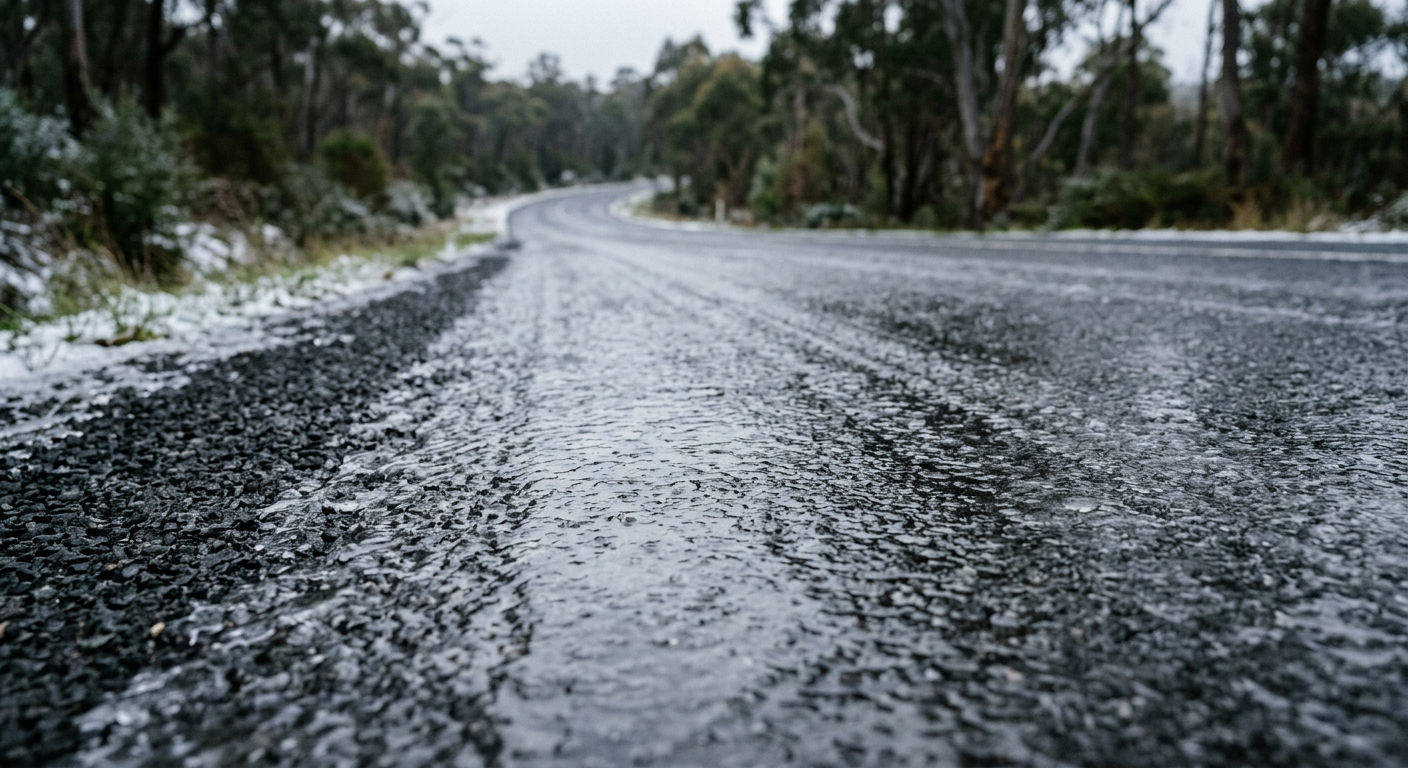
If you are wondering what is black ice, it is a thin, nearly transparent layer of clear ice that forms on frozen road surfaces. It appears black because the dark pavement colour shows through the ice. It typically occurs when freezing rain falls on surfaces at or below zero degrees Celsius.
Key takeaways
Black ice is a thin glaze of clear ice that blends with the pavement, making it nearly invisible to drivers.
Below seven degrees Celsius, standard tyres harden and lose their grip, increasing the danger of glazed road surfaces on your journey.
Bridges, overpasses, and shaded road sections are high-risk zones because they lose heat much faster than solid ground.
Modern vehicle safety systems, including anti-lock brakes, often struggle to maintain control due to the near-zero friction coefficient of a glazed surface.
What is black ice: The Science Behind Invisible Ice
Meteorological Conditions: When Freezing Rain Meets Sub-Zero Surfaces
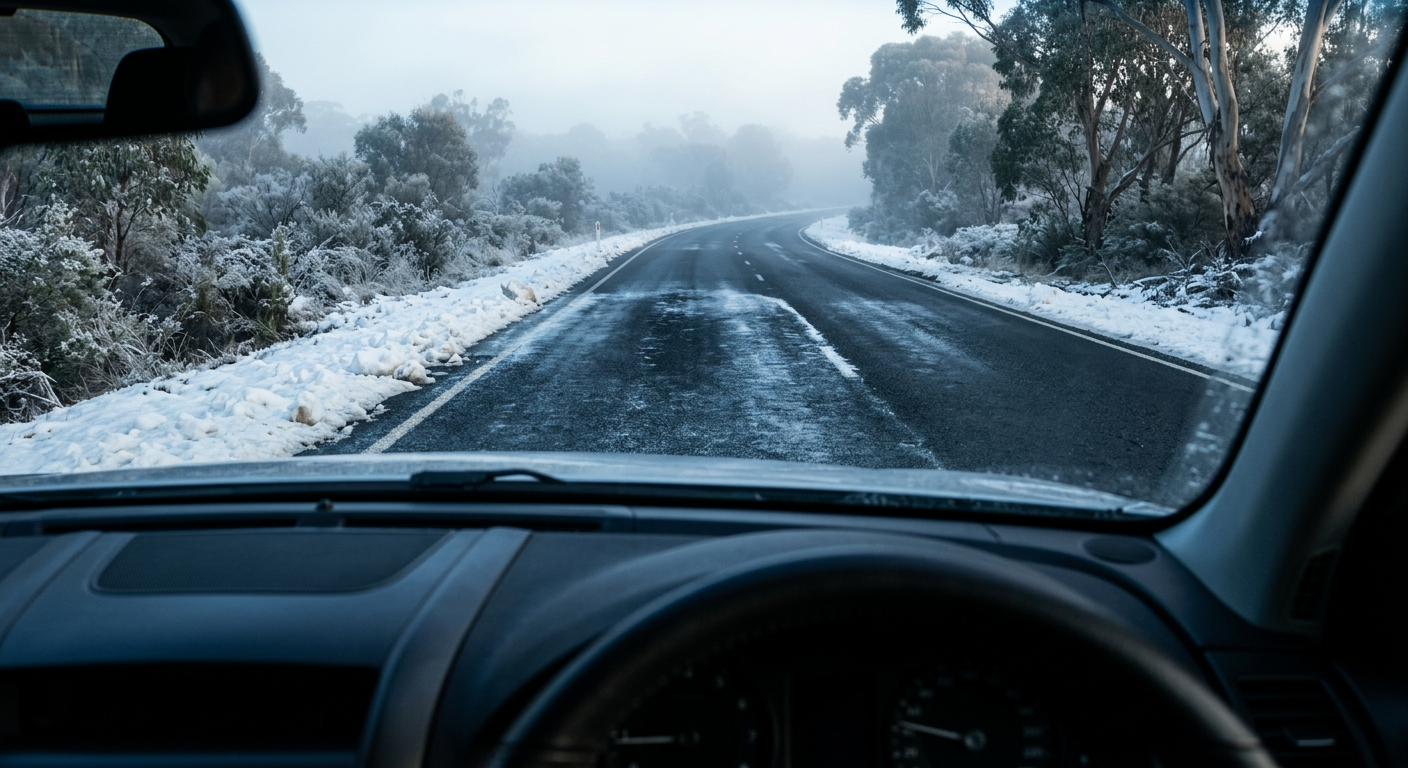
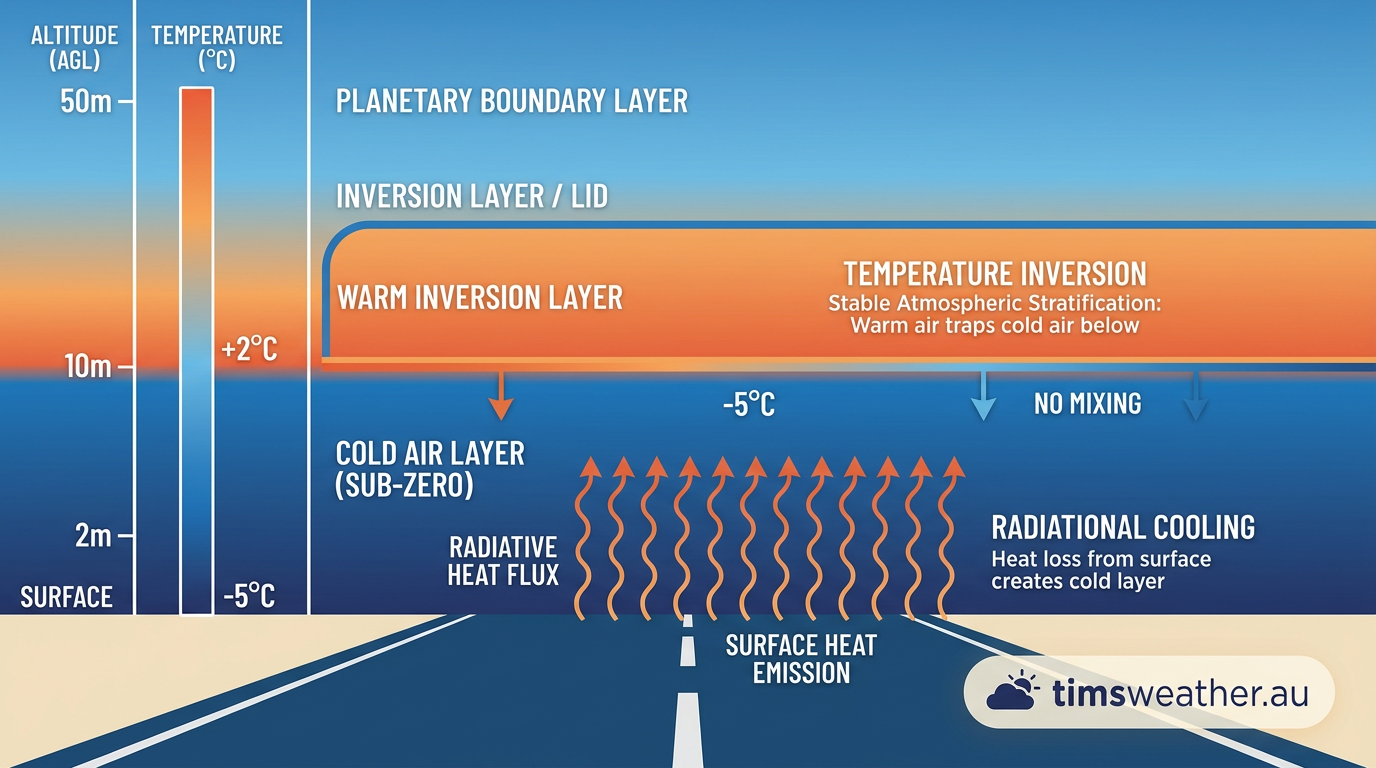
The atmospheric profile required for clear ice formation relies on a highly specific sequence of temperature and moisture overlapping. It is not enough for the air to simply be cold. Often, how do temperature inversions form plays a direct role. An inversion occurs when a layer of warm air sits above a shallow layer of sub-zero air at the surface. Precipitation falls through the warm layer, melting into liquid rain, before entering the freezing layer just above the ground.
The role of dew point and radiational cooling
Transport agencies and meteorologists rely heavily on dew point measurements to predict slippery road conditions. The dew point is the temperature at which air reaches full moisture saturation. If the ambient air temperature drops to the dew point, and both values fall below freezing, atmospheric water vapour transforms directly into frost or ice. However, geographic risk profiling shows that clear ice is most prevalent during calm nights when radiational cooling is at its peak.
During radiational cooling, the earth's surface continuously radiates infrared energy back into space. Without a blanket of clouds to trap this heat, the pavement surface temperature plummets rapidly. It often falls several degrees lower than the ambient air temperature recorded by standard weather stations.
A road weather forecast might show an air temperature of two degrees Celsius, but the physical asphalt could be below freezing. If there is any residual moisture on the ground from earlier rain or melting snow, this stark temperature differential causes the water to freeze quietly from the bottom up.
Road Weather Information System (RWIS) sensor data consistently flags these exact pavement-to-air temperature gaps as the primary trigger for sudden icing events. These hidden environmental factors are closely monitored by legal experts analysing winter crashes, as they demonstrate how rapidly and unpredictably a seemingly safe road can turn into a completely frictionless surface without warning.
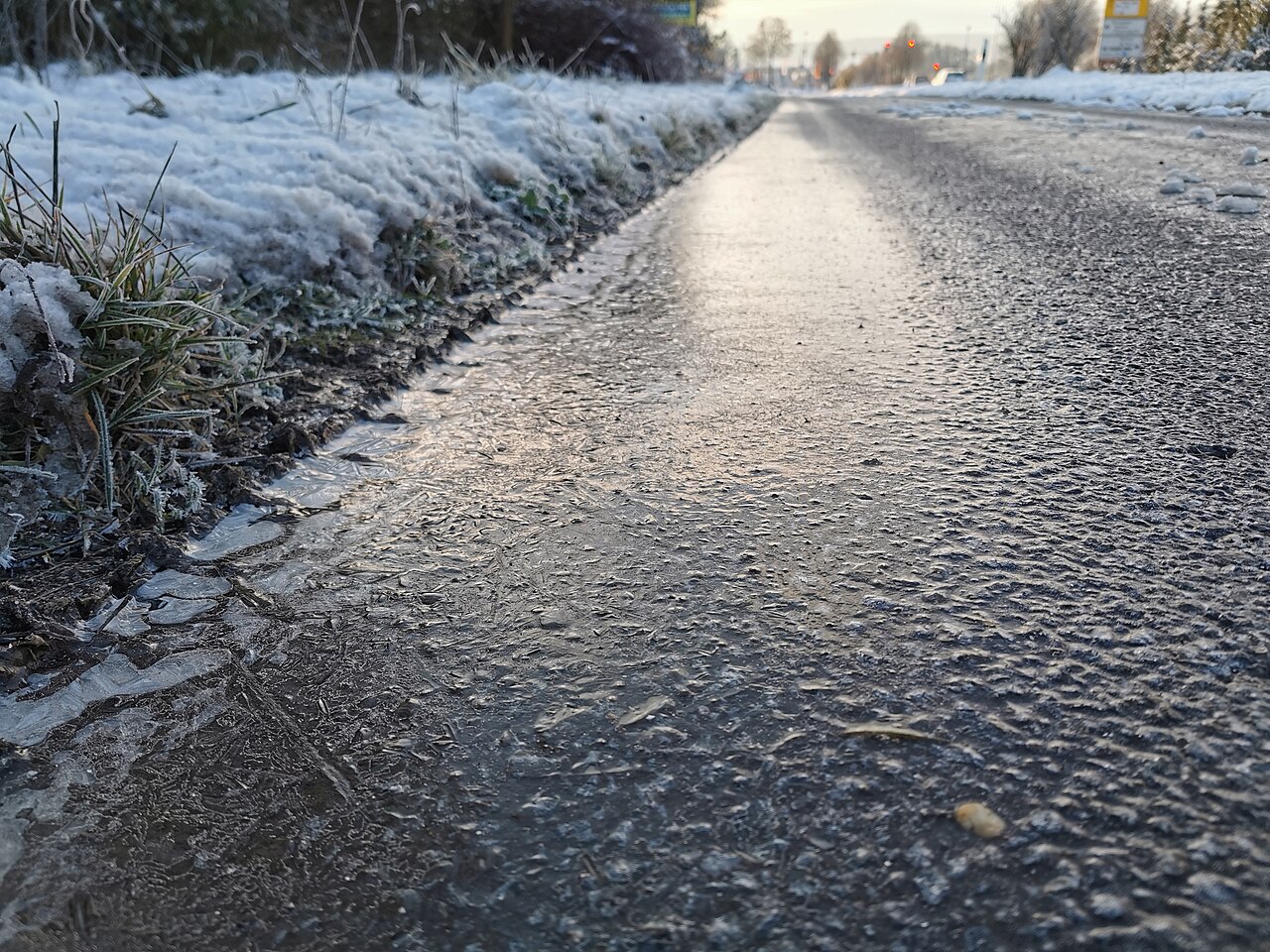
Why Bridges and Overpasses Freeze First
A standard rule of winter driving safety is the assumption that elevated structures will freeze well before the surrounding roadway. Bridges and overpasses lack the insulating thermal mass of the earth beneath them.
A standard highway built on soil absorbs geothermal heat during the day and releases it slowly at night. This continuous release of thermal energy helps keep the pavement surface temperature slightly warmer than the freezing air directly above it.
Heat loss and air circulation
Elevated road decks are exposed to cold air on all sides. When a cold front moves through, the freezing winds sweep continuously beneath the bridge deck, drawing heat away through rapid convective cooling.
This total exposure means the concrete and steel structure loses stored thermal energy at an accelerated rate. As reports of bridge icing consistently demonstrate, a driver can be travelling on perfectly clear, dry roads, only to hit an overpass where the microscopic moisture in the air has rapidly condensed and frozen into a solid sheet of glaze ice.
These elevated structures are also highly susceptible to freeze-thaw cycles. During daylight hours, winter sunshine might melt snowbanks piled on the shoulders of the overpass. The meltwater then flows across the travel lanes.
As the sun sets and temperatures drop abruptly, the lack of ground insulation causes the wet surface to refreeze almost instantly. Shaded road sections, particularly those blocked from direct sunlight by mountains or tall buildings, share this same thermal vulnerability and often retain patches of clear ice long after the rest of the highway has dried completely.
Beyond Speed: The Physics of Friction Loss on Glazed Roads
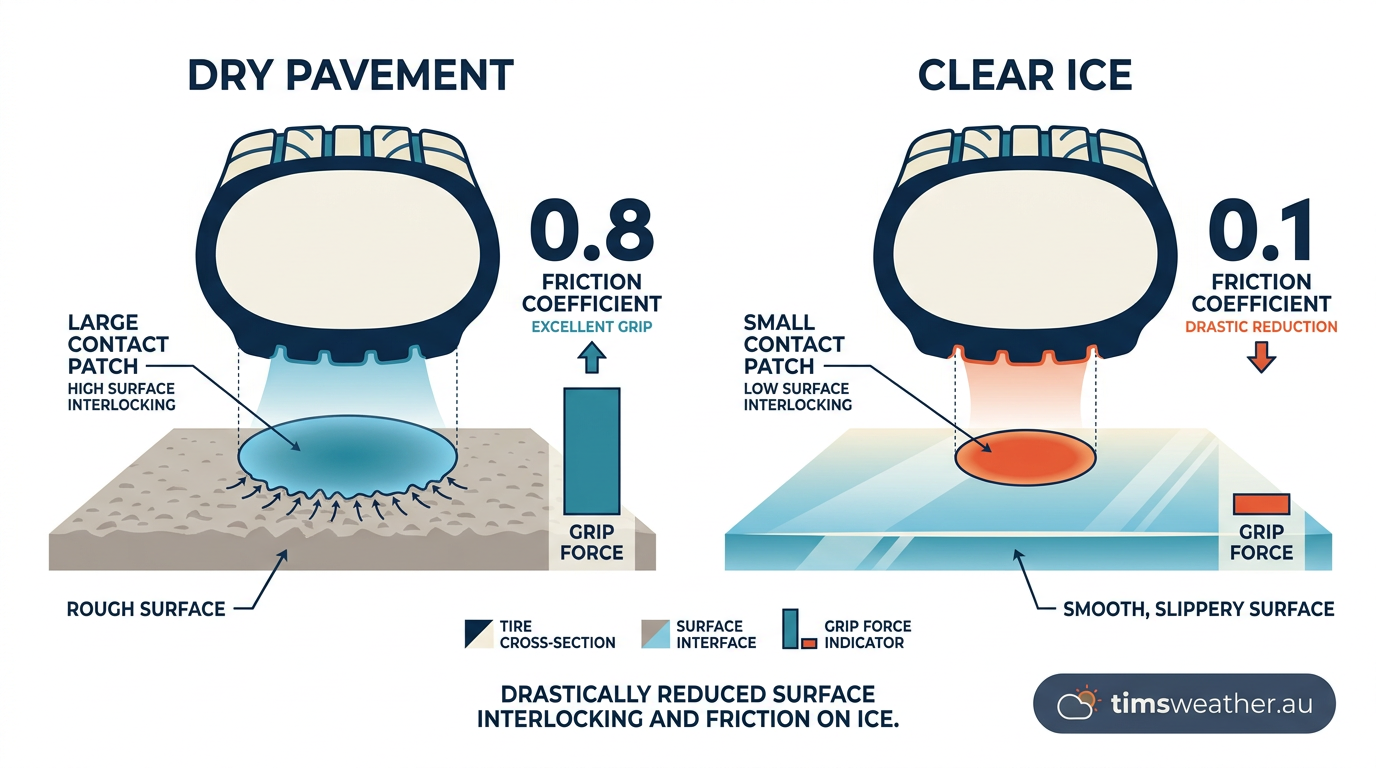
The primary danger of clear ice is not just its invisibility, but the extreme physical properties of the ice itself. On dry asphalt, a standard passenger vehicle tyre operates with a friction coefficient of around 0.7 to 0.9.
This high level of mechanical grip allows the tyre tread to bite into the porous surface of the road, facilitating rapid acceleration, sharp cornering, and emergency braking. When clear ice forms over that same pavement, the friction coefficient plummets to 0.1 or lower.
Road friction and tire rubber compounds
At a microscopic level, freezing rain fills all the pores and aggregate gaps in the asphalt, creating a non-porous, perfectly smooth surface. Standard summer or all-season tyre rubber hardens when temperatures drop below seven degrees Celsius, turning into rigid blocks that cannot flex or conform to the road.
Dedicated winter tyres are manufactured with specialised silica-infused rubber compounds designed to stay pliable in sub-zero temperatures. Even with these specialised compounds, the presence of a microscopically thin layer of water sitting on top of the glaze ice acts as a perfect lubricant, severing the vehicle's physical connection to the road.
Data-driven analyses of vehicle dynamics show exactly why modern safety features struggle to mitigate a sudden loss of traction. Anti-lock Braking Systems (ABS) and Electronic Stability Control (ESC) rely on rotational speed sensors at each wheel. If the sensors detect a wheel locking up, the ABS modulates brake pressure to regain traction.
However, on smooth clear ice, all four wheels can lose traction simultaneously. The system's algorithms, calibrated to expect at least a minimal threshold of road friction, cannot function effectively when the grip level is practically zero. As winter road safety resources explain, relying solely on technology without adjusting your physical driving behaviour often leads to a complete loss of control.
Condition Type | Visibility | Relative Traction | Primary Formation Cause |
|---|---|---|---|
Black Ice (Clear Ice) | Very Low (Transparent) | Near Zero (Friction < 0.1) | Freezing rain, refrozen meltwater |
Packed Snow | High (White/Opaque) | Moderate (Friction ~0.3) | Accumulated snowfall compressed by tyres |
Slush | High (Grey/Wet) | Variable (Prone to hydroplaning) | Partially melted snow above freezing |
Dry Pavement | Normal | Excellent (Friction ~0.8) | Clear, dry weather conditions |
Emergency Maneuvers: What to Do When Your Vehicle Breaks Traction
A step-by-step kinetic analysis of a vehicle losing traction on non-porous surfaces highlights the critical importance of measured, calm driver inputs. When a car hits a patch of black ice, the immediate physical reaction is a total loss of steering feel. The steering wheel will suddenly feel incredibly light, and the vehicle may begin to track sideways or drift out of its designated lane. This occurs because the front tyres are no longer generating lateral forces against the road surface.
How to recover from a skid
If you realise you are driving on a frozen road surface, the most important rule is to make absolutely no sudden mechanical inputs. Do not hit the brakes, do not sharply turn the steering wheel, and do not abruptly lift off the accelerator.
An abrupt lift-off shifts the vehicle's weight forward, unweighting the rear tyres and often inducing an immediate rear-wheel skid known as oversteer. Instead, keep the steering wheel pointed straight and gently ease your foot off the accelerator.
If the rear of the vehicle begins to slide out, you must steer smoothly in the direction of the skid. This means if the rear of the car is sliding to the right, you turn the steering wheel gently to the right. This allows the front wheels to align with the vehicle's current direction of travel, giving the tyres the best possible chance to regain rolling friction once they clear the ice patch.
As transport discussion groups frequently emphasise, trying to force the vehicle back into its original lane through harsh steering will only compound the rotational force, leading to an uncontrolled spin. Panic braking will lock the wheels completely, turning the car into an unguided physical mass. Maintaining a calm, steady physical response is the only effective way to work through through the hazard.
Official Warnings and Road Safety Protocols
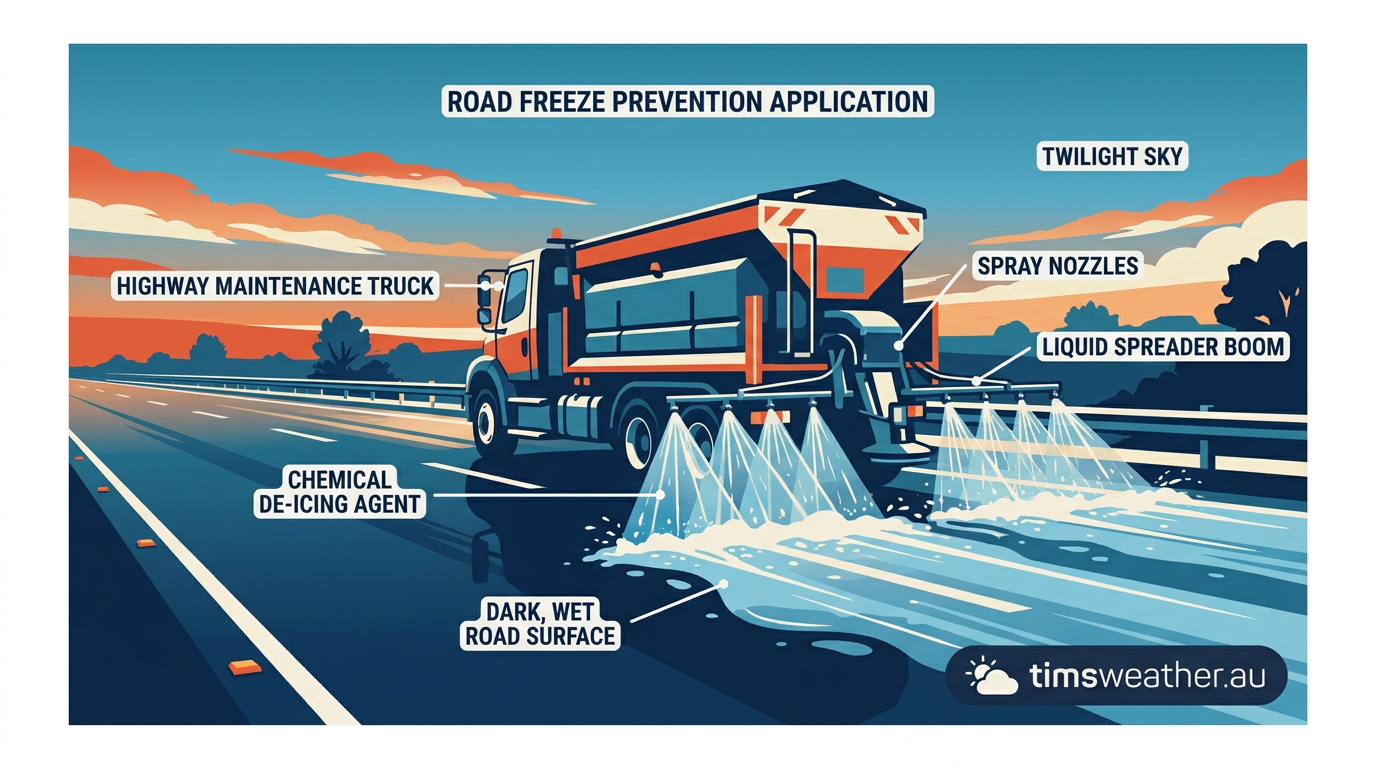
Transport agencies and weather offices treat clear ice as a severe road-surface hazard rather than a separate precipitation type. In operational weather forecasting, you will rarely see a specific warning dedicated solely to "black ice." Instead, national weather services flag the hazard within broader Winter Storm Warnings, frost advisories, or special weather statements regarding rapidly falling temperatures. These alerts notify the public that surface conditions are deteriorating, even if the sky remains clear.
How to spot black ice at night
Official guidance stresses that visual detection is exceedingly difficult, especially at night. Motorists are advised to look for subtle environmental clues. If the road ahead appears dark, glossy, or wet, but there is no spray coming off the tyres of the vehicles in front of you, you should assume the surface is frozen. A sudden lack of road noise from your own tyres is another strong indicator that you have transitioned from wet asphalt to a smooth, icy glaze.
Emergency management teams, such as the Fairfield emergency management agency, frequently remind the public that if you think you can simply watch out for icy patches while maintaining normal highway speeds, you are already putting yourself in danger. Preparation requires lowering speeds entirely during freeze-thaw cycles.
Transport departments use extensive networks of RWIS stations to monitor pavement temperature and apply chemical de-icing agents before the freeze occurs. However, these treatments can wash away in heavy rain or become entirely ineffective at extremely low temperatures.
Ultimately, defensive driving remains the primary mitigation strategy against slippery road conditions. Whenever the air temperature sits near zero degrees Celsius and the roads look damp, assume that patches of clear ice are present, especially in shaded areas and on elevated structures. Increasing your following distance, reducing your speed, and staying alert for visual and auditory cues are the most effective methods to protect yourself from this invisible winter threat.
Sources
NOAA weather and atmospheric science reference (repository.library.noaa.gov)
NOAA weather and atmospheric science reference (nssl.noaa.gov)
Bureau of Meteorology weather reference (bom.gov.au)
International Cloud Atlas (cloudatlas.wmo.int)
NOAA weather and atmospheric science reference (repository.library.noaa.gov)
tmr.qld.gov.au PDF reference (tmr.qld.gov.au)
austroads.gov.au PDF reference (austroads.gov.au)
tmr.qld.gov.au PDF reference (tmr.qld.gov.au)
Last verified: 2026-09-22
Frequently asked questions
Black ice is a thin, nearly invisible layer of ice covering the road surface. It appears dark or wet because the underlying pavement remains visible through the glaze. This lack of visual contrast makes it exceptionally dangerous, as motorists often fail to realise they are driving over an icy hazard.
Further reading and resources
Explore trusted articles, books, videos and other resources to go deeper on this topic.
soloinsurance.netArticle
Black Ice: The Winter Danger You Don't See Coming - Solo Insurance
In-depth coverage on Black Ice: The Road Hazard You Can't See Coming from soloinsurance.net.
youtube.comVideo
Black ice safety tips: How to drive in winter storm conditions - YouTube
Video coverage on Black Ice: The Road Hazard You Can't See Coming from youtube.com.
allstate.comArticle
Black Ice: What You Need to Know | Allstate
In-depth coverage on Black Ice: The Road Hazard You Can't See Coming from allstate.com.
pmc.ncbi.nlm.nih.govReference
Improvements of Warning Signs for Black Ice Based on Driving ... - PMC
Background reference on Black Ice: The Road Hazard You Can't See Coming from pmc.ncbi.nlm.nih.gov.
wpafb.af.milArticle
Black ice is a hard-to-see road hazard - Wright-Patterson AFB
In-depth coverage on Black Ice: The Road Hazard You Can't See Coming from wpafb.af.mil.
statefarm.comArticle
What Is Black Ice? Watch for This Winter Road Hazard - State Farm®
In-depth coverage on Black Ice: The Road Hazard You Can't See Coming from statefarm.com.
hardywolf.comArticle
Black Ice: Driving Tips, Safety Information and Accident Prevention
In-depth coverage on Black Ice: The Road Hazard You Can't See Coming from hardywolf.com.
nationalgeographic.comArticle
What is black ice? The science behind the winter threat
In-depth coverage on Black Ice: The Road Hazard You Can't See Coming from nationalgeographic.com.
vniles.comArticle
Black Ice Tips | Niles, IL - Official Website
In-depth coverage on Black Ice: The Road Hazard You Can't See Coming from vniles.com.
trafficsafetystore.comArticle
Black Ice Explained: Why It's So Dangerous (and How Drivers Can ...
In-depth coverage on Black Ice: The Road Hazard You Can't See Coming from trafficsafetystore.com.
Planning weeks ahead?
Check Australia's long-range seasonal outlook for rainfall, temperature and the climate drivers (ENSO, IOD, SAM, MJO) shaping the next three months.
View Australia's Seasonal Weather Forecast