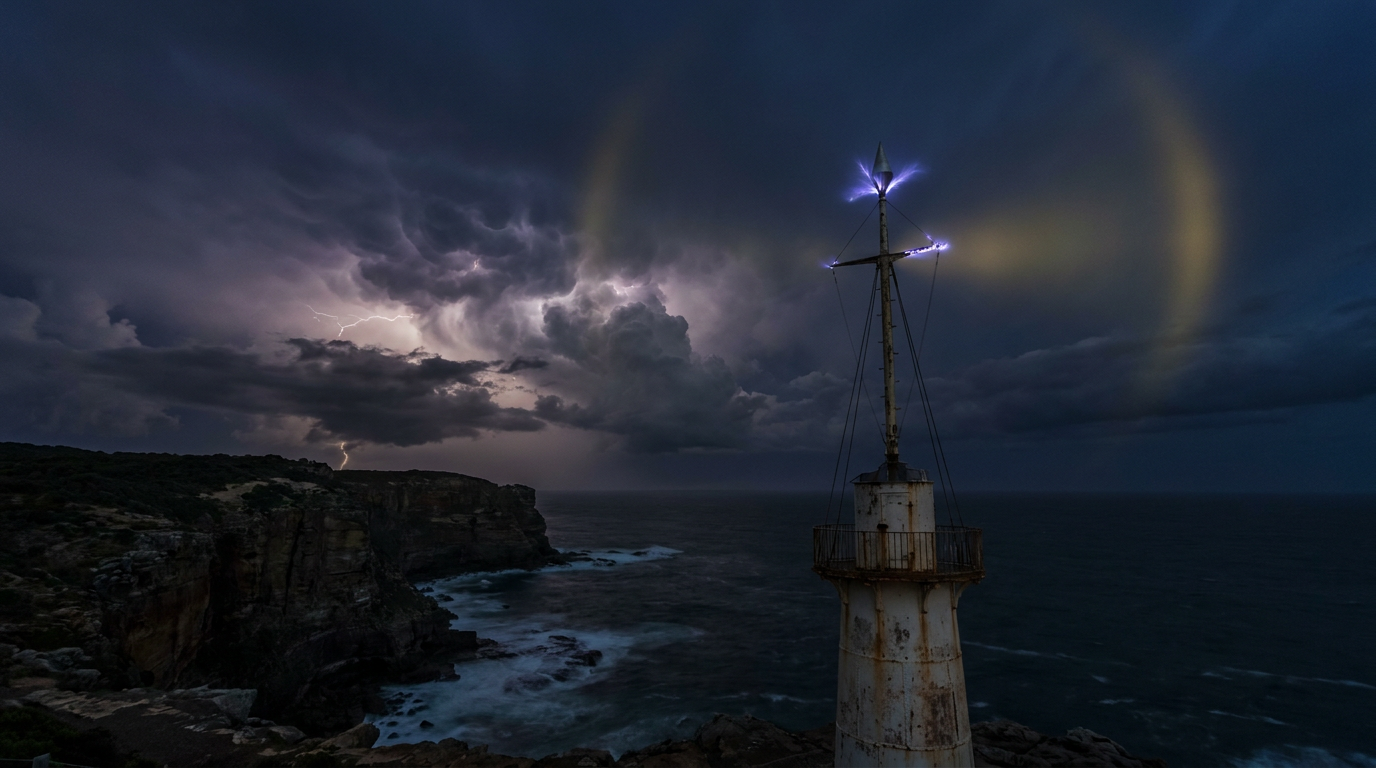
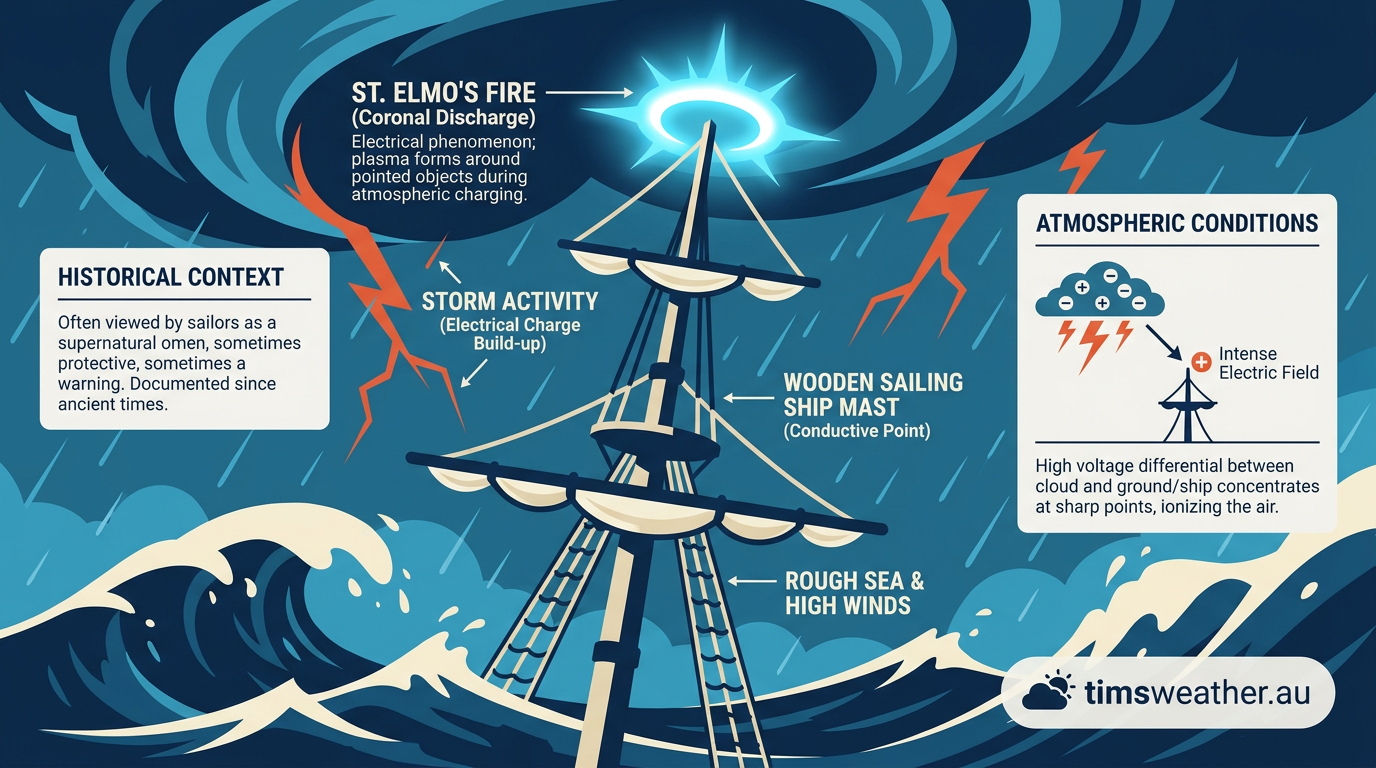
Its by the process of corona discharge. When the electric field strength near a pointed, conductive object like a ship mast becomes sufficiently intense, it causes the surrounding air to ionize. This creates a low-level plasma glow, resulting in the visible, steady luminescence known as St. Elmo's fire.
Key takeaways
St. Elmo's fire is a continuous corona discharge, not a form of combustion or a direct lightning strike.
The glow develops when extreme electric field strength ionizes atmospheric gases, turning them into a luminous plasma.
The phenomenon specifically targets sharp, pointed structures because the point discharge effect concentrates the local electromagnetic field.
While the glow itself is harmless, its presence indicates a highly charged thunderstorm environment where severe weather risks are elevated.
How does St. Elmo's fire form?
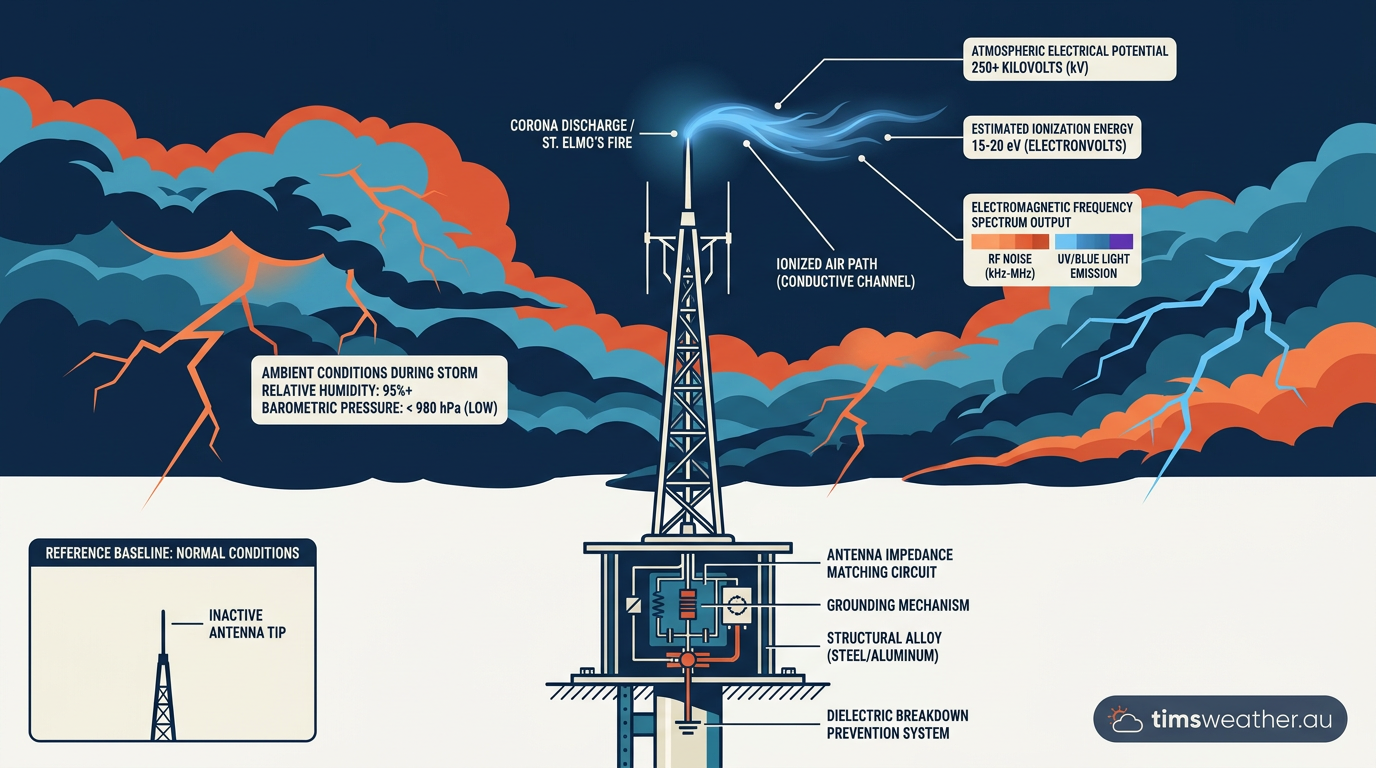
To fully understand how does St. Elmo's fire form, meteorologists examine the exact threshold where neutral atmospheric gases lose their insulating properties. During calm weather, the atmosphere acts as an effective electrical insulator. When severe thunderstorms develop, intense updrafts and downdrafts separate electrical charges within the cloud. This massive charge separation generates an immense local electromagnetic field between the cloud base and the surface below.
When this electric field strength encounters a pointed conductive object, it initiates a localized breakdown of the surrounding air. The process does not involve heat or fire; instead, it is a purely electrical transition known as a glow discharge. This phenomenon serves as a visible indicator of intense atmospheric electricity acting upon the physical environment.
The transition from neutral gas to plasma state
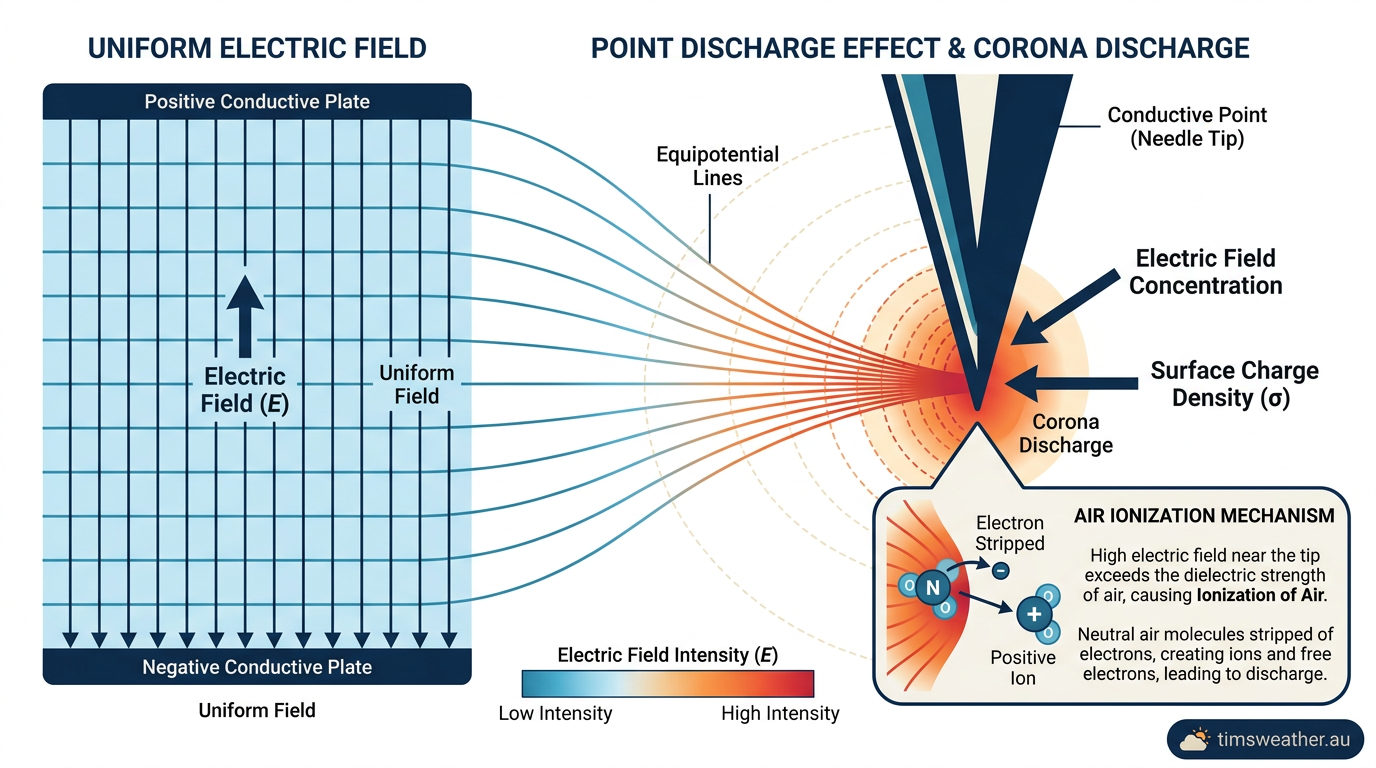
Air consists primarily of nitrogen and oxygen molecules, which are usually electrically neutral. However, when an extreme electric field is applied, it exerts significant force on the electrons orbiting these molecules. If the field is powerful enough, it strips electrons away from their atomic nuclei in a process known as the ionization of air. This violent separation creates a mixture of positively charged ions and free-floating electrons, transforming the local air into a highly conductive plasma phenomenon.
The visible light we recognize as St. Elmo's fire occurs during the recombination phase. As free electrons crash back into the positively charged ions, they release excess energy in the form of photons. Because the Earth's atmosphere is rich in nitrogen and oxygen, the resulting light emission falls squarely in the blue and violet spectrum, creating the signature ghostly glow.
The point discharge effect
You rarely see a corona discharge spread across a flat roof or a calm ocean surface. It preferentially appears on the tips of ship masts, lightning rods, aircraft wings, and church steeples. This selective targeting is driven by a principle in electromagnetism known as the point discharge effect, which was heavily documented during early static electricity experiments by Benjamin Franklin. When a conductive object sits within an external electric field, the electrical charges on that object redistribute themselves.
On a smoothly curved or flat surface, these charges spread out evenly. On a sharp, pointed surface, the electrical charges crowd together at the very tip. This concentration creates a localized, extreme electric field immediately surrounding the point. While the broader atmospheric field might not be strong enough to ionize the air, the magnified field at the tip easily surpasses the threshold required to strip electrons from nearby air molecules.
Meteorological measurements and field gradients
Meteorologists use specific sensing metrics to measure the potential gradient of the atmosphere, usually recorded in volts per metre. On a clear day, the ambient electric field near the surface is roughly 100 volts per metre. When storm clouds build overhead, that local gradient can quickly escalate to tens of thousands of volts per metre. If you want to understand how does thunder form, you must first look at this immense charge buildup that eventually triggers violent atmospheric equalization.
St. Elmo's fire requires a lower threshold than a full lightning strike. The concentrated field at a sharp point only needs to reach about 100,000 volts per metre to sustain a localized glow discharge. According to the Glossary of Meteorology, this continuous discharge will remain attached to the sharp conductor and safely extinguish as soon as the ambient atmospheric field weakens.
Real-world observations in nature
While historically associated with tall metallic structures, the phenomenon can occur on natural objects if the electrical field is intense enough. During severe storms, the leaves and needles of tall trees can act as sharp points, concentrating the electric field. A team from Penn State University observed glowing tree tips for the first time in 2024 using a specialized ultraviolet-sensitive camera mounted on a minivan, capturing these faint violet-blue coronae across various forested locations, as detailed by the Royal Meteorological Society.
Distinguishing St. Elmo's fire from ball lightning
Many observers confuse different luminous atmospheric events, leading to widespread misidentification. Though multiple phenomena involve glowing plasma, their physical behaviours, triggers, and durations are entirely distinct. How the mechanics of atmospheric electricity requires separating localized corona discharges from unattached anomalies and sudden, violent equalization events.
St. Elmo's fire vs ball lightning
The primary difference between these two phenomena is physical attachment. St. Elmo's fire is a steady-state corona discharge that is physically tethered to a solid, pointed conductor. It requires a continuous ambient electric field to maintain its glow; if the storm moves away and the field drops, the light vanishes instantly.
If you are exploring how does ball lightning form, you are looking at a much rarer, unattached anomaly. Ball lightning appears as a free-floating sphere of glowing plasma that can drift through the air, pass through open windows, or roll along the ground. It typically lasts only a few seconds and often ends with a sharp explosion, whereas St. Elmo's fire can persist for many minutes in silence or with a gentle hiss.
Differentiating from impulsive lightning strikes
It is important to differentiate a glow discharge from actual lightning. A standard cloud-to-ground strike involves complete electrical breakdown through a conductive channel that can extend several kilometres. It is a sudden, impulsive discharge carrying tens of thousands of amps of electrical current. By contrast, St. Elmo's fire is a continuous, luminous electrical discharge of very weak intensity, typically carrying mere microamps of current.
When studying how does cloud-to-ground lightning form, scientists look for dielectric breakdown, which is the exact point at which air completely fails as an insulator. This requires an electric field of about three million volts per metre. St. Elmo's fire actively bleeds off charge before this upper threshold is reached, creating a gentle glow rather than a violent spark.
Laboratory research and artificial displays
Due to the rarity of natural, sustained sightings in urban environments, atmospheric physicists often turn to artificial generation in laboratory settings to study these differences safely. By simulating storm conditions indoors, scientists can measure exactly how much voltage is required to initiate a corona without triggering a full lightning arc. In 2026, experiments successfully created artificial St. Elmo's fire using high-voltage techniques involving PVC pipes and acrylic glass to replicate the natural self-luminous glow, as reported by Atmospheric Phenomena.
Phenomenon | Nature of Discharge | Visual Appearance | Associated Risk Level |
|---|---|---|---|
St. Elmo's Fire | Continuous localized corona | Blue/violet glow on sharp points | Low (but signals nearby danger) |
Ball Lightning | Unattached plasma sphere | Floating luminous orb | Moderate (unpredictable movement) |
Cloud-to-Ground Lightning | Impulsive dielectric breakdown | Bright jagged flash | Extreme (fatal electrical current) |
Static Spark | Minor localized equalization | Brief tiny flash | Negligible |
Why the phenomenon primarily affects maritime and aviation vessels
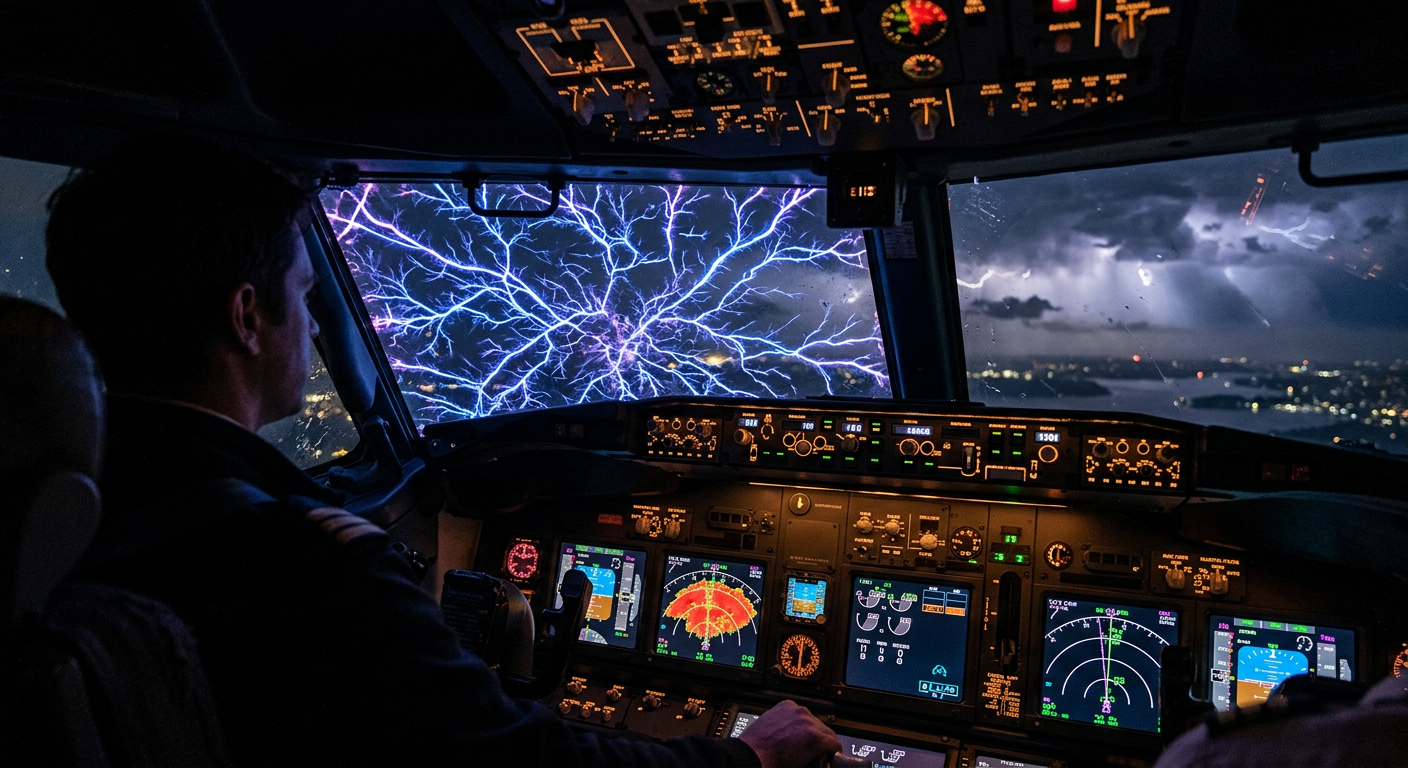
The history of this glowing plasma is deeply connected to travel across the oceans and through the sky. Before modern meteorology could explain the physics of the Ionosphere or electric field gradients, the phenomenon was simply observed as an unavoidable reality of working through through severe weather. The environments encountered by ships and aircraft present the perfect conditions for continuous point discharges.
History of St. Elmo's fire sightings
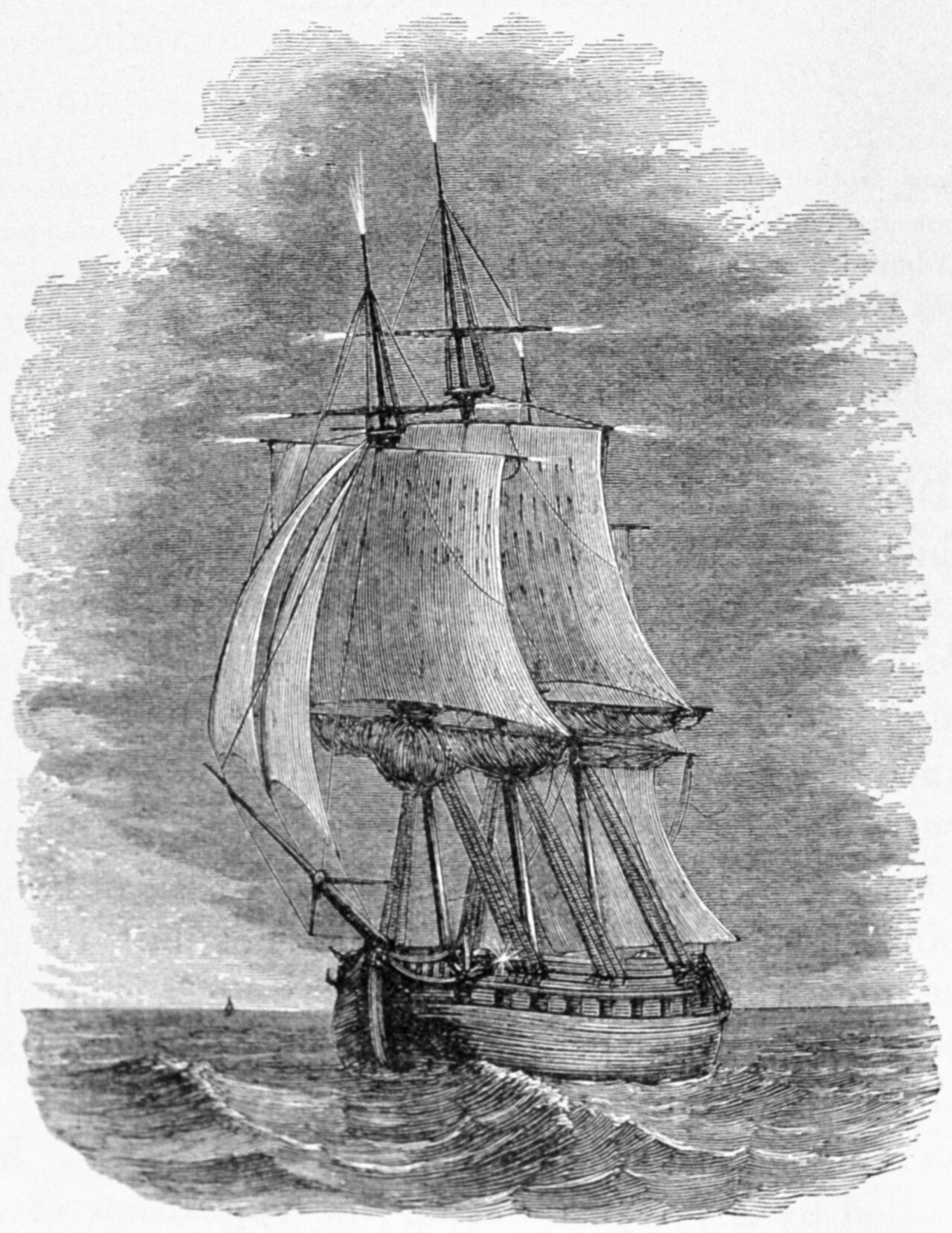
The maritime history of this electrical glow is rich with observation and superstition. Long before physicists understood corona discharge physics, sailors documented ghostly blue flames appearing in the rigging of their galleons. The name itself is deeply rooted in maritime folklore, tied directly to the patron saint of sailors, Saint Erasmus of Formia.
Mediterranean sailors considered its appearance a religious omen, often referring to it by an older term, corposant, and noting its tendency to manifest during the latter phases of violent squalls. Historical naval expeditions recorded these displays extensively, with many captains noting the glow immediately preceding heavy rainfall. The phenomenon has been documented in classical texts regarding Luminous Phenomena, linking positively charged conductors in negatively charged storm atmospheres.
The role of the electromagnetic field at sea
For centuries, sailing ships provided the perfect, unintentional laboratory for atmospheric electricity. The open ocean is perfectly flat and highly conductive, meaning it does not disrupt the Earth's natural electric field. A ship's tall wooden or metal mast represents the only sharp, elevated point for miles in any direction.
When a vessel sails beneath heavy cumulonimbus clouds, the extreme electrical gradient between the ocean surface and the storm focuses entirely on the masthead. The ship acts as a giant lightning rod, and the concentrated field at the top of the mast guarantees a bright, sustained luminous display as the vessel moves through the electrified air.
Does St. Elmo's fire happen on airplanes?
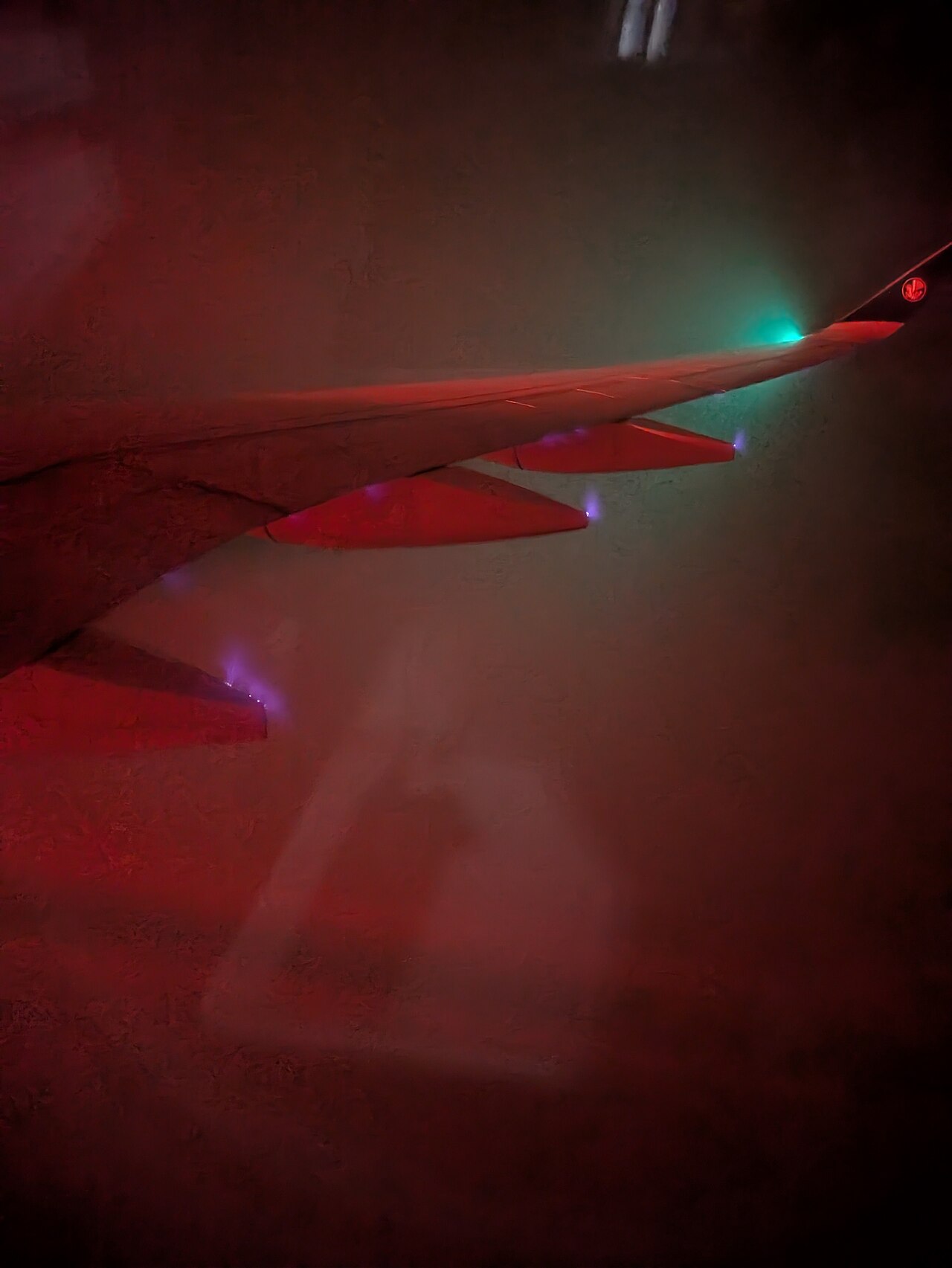
Yes, the phenomenon is frequently encountered in modern aviation, though the physics involve both the ambient weather and the physical movement of the aircraft itself. As an airplane flies through rain, dust, and ice crystals, the physical friction against the fuselage creates a massive static charge. This triboelectric charging is similar to static buildup on everyday objects, but on a massive scale.
If the aircraft is flying near active convection, the ambient electric fields of the storm combine with the airplane's own frictional charge. If you study how do single-cell thunderstorms form, you understand that these updrafts act as giant batteries. When an aircraft enters this charged airspace, its wings and nose become primary points for corona discharge.
Static electricity and aeronautical safety
Aeronautical safety relies heavily on managing this electrical buildup. Modern aircraft are equipped with static wicks, which are small pointed rods installed on the trailing edges of the wings and tail. These wicks are specifically designed to safely bleed static electricity back into the air through controlled corona discharges. During severe weather, these wicks, the nose cone, and the cockpit windshield can erupt in a bright violet glow.
During hurricane operations in recent years, a pilot flying near intense storms recorded a dramatic video showing continuous electrical discharge spider-webbing heavily across the cockpit glass, as shared by AccuWeather. Similar encounters in thunderstorm environments have shown what looks like miniature lightning bolts dancing continuously across the windshield for several minutes, documented in video footage by meteorologist James Spann.
Identifying the phenomenon and interpreting the danger
Observing a steady blue glow on the tip of an antenna or a ship's mast is a fascinating experience, but it serves a highly practical purpose for weather forecasting and safety. How how to identify the phenomenon allows observers to assess the atmospheric pressure environment and make safe navigational decisions.
How to identify St. Elmo's fire at sea
For modern mariners, identifying the glow relies on both visual and auditory cues. Visually, you will see a faint, flickering blue or purple light clinging to the highest points of the vessel, such as radio antennae, radar mounts, or the tips of the mast. The glow does not consume the material it attaches to, confirming it is a cold plasma rather than a hot chemical fire.
Auditory clues are just as distinct. Because the ionization of air causes rapid micro-bursts of air expansion, close observers usually hear a distinct buzzing, hissing, or crackling noise. This sound is often compared to the noise of frying bacon or the hum of high-tension power lines. If you are tracking how do low-pressure systems form into massive oceanic squalls, listening for this hiss on your radio equipment can be an early indicator of severe electrification.
Conditions required for St. Elmo's fire
Specific atmospheric conditions must align to generate the required field strength. Severe thunderstorms are the primary trigger, but they are not the only cause. Intense winter weather, particularly heavy snowstorms involving high wind shear, can generate massive amounts of static electricity through the friction of ice crystals colliding in the air. If you learn how do snowflakes form, you will know that sharp ice crystals generate immense static potential when striking metal surfaces at high speeds.
Volcanic ash clouds represent another extreme trigger. If you explore how does volcanic lightning form, you see that rapid volcanic updrafts push abrasive silicate ash into the atmosphere, creating monumental static charges. These static fields readily ignite corona discharges on any nearby aircraft or elevated monitoring equipment.
Is St. Elmo's fire dangerous to ships or aircraft?
The glow itself is entirely harmless. It emits no significant heat, cannot ignite sails or fuel vapors under normal atmospheric conditions, and carries insufficient current to electrocute a person. However, the presence of St. Elmo's fire is a critical meteorological warning.
In aviation and maritime safety protocols, this glow confirms that the vessel is deeply embedded in a hazardous environment. It indicates that direct lightning strikes, severe turbulence, hail, and icing are highly probable in the immediate vicinity. It does not perfectly predict when or where lightning will strike, but it serves as a stark visual alarm.
Forecasting and observing atmospheric electricity
Meteorological agencies monitor atmospheric electricity to forecast severe weather impacts. When pilots or ship captains report sustained corona discharges, it helps forecasters confirm the severity of local convective systems. While the glowing plasma on a ship mast might look beautiful, the safest response is to treat it as a warning.
Aeronautical authorities advise pilots experiencing heavy static discharge to monitor their radar closely and prepare for potential turbulence. Similarly, mariners experiencing heavy discharge should ensure all crew members stay clear of tall metal structures and alter course to escape the highest concentration of electrical energy.
Sources
Saint Elmo (cloudatlas.wmo.int)
Hazardous Materials | Hazardous Material (abc.net.au)
Weird Ocean Phenomena (oceanservice.noaa.gov)
Fire | Sundial (abc.net.au)
Fire | Maculata HR (abc.net.au)
International Cloud Atlas (cloudatlas.wmo.int)
Bureau of Meteorology weather reference (bom.gov.au)
Ball lightning plot thickens (abc.net.au)
Last verified: 2026-09-16
Frequently asked questions
St. Elmo’s fire forms when a strong electric field in the atmosphere ionises the air around a pointed object. This process creates a glowing corona discharge. Because the air molecules are excited rather than burning, it produces a distinct visual glow on structures like masts or aircraft wing tips during storms.
Source: biologyinsights.com
Further reading and resources
Explore trusted articles, books, videos and other resources to go deeper on this topic.
science.howstuffworks.comArticle
What is St.Elmo's Fire? - Science | HowStuffWorks
In-depth coverage on How Does St. Elmo's Fire Form? The Atmospheric Physics Explained from science.howstuffworks.com.
youtube.comVideo
What is a St. Elmo's Fire? - YouTube
Video coverage on How Does St. Elmo's Fire Form? The Atmospheric Physics Explained from youtube.com.
britannica.comReference
Saint Elmo's fire | Electricity, Plasma, Lightning | Britannica
Background reference on How Does St. Elmo's Fire Form? The Atmospheric Physics Explained from britannica.com.
kqed.orgArticle
"I Flamed Amazement": The Physics of St. Elmo's Fire | KQED
In-depth coverage on How Does St. Elmo's Fire Form? The Atmospheric Physics Explained from kqed.org.
quora.comArticle
What is St. Elmo's fire? - Quora
In-depth coverage on How Does St. Elmo's Fire Form? The Atmospheric Physics Explained from quora.com.
rottentomatoes.comArticle
St. Elmo's Fire - Rotten Tomatoes
In-depth coverage on How Does St. Elmo's Fire Form? The Atmospheric Physics Explained from rottentomatoes.com.
scientificamerican.comArticle
"What causes the strange glow known as St. Elmo's Fire? Is this ...
In-depth coverage on How Does St. Elmo's Fire Form? The Atmospheric Physics Explained from scientificamerican.com.
letterboxd.comArticle
St. Elmo's Fire (1985) directed by Joel Schumacher - Letterboxd
In-depth coverage on How Does St. Elmo's Fire Form? The Atmospheric Physics Explained from letterboxd.com.
en.wikipedia.orgReference
St. Elmo's fire - Wikipedia
Background reference on How Does St. Elmo's Fire Form? The Atmospheric Physics Explained from en.wikipedia.org.
tv.apple.comArticle
St. Elmo's Fire - Apple TV
In-depth coverage on How Does St. Elmo's Fire Form? The Atmospheric Physics Explained from tv.apple.com.
Planning weeks ahead?
Check Australia's long-range seasonal outlook for rainfall, temperature and the climate drivers (ENSO, IOD, SAM, MJO) shaping the next three months.
View Australia's Seasonal Weather Forecast