
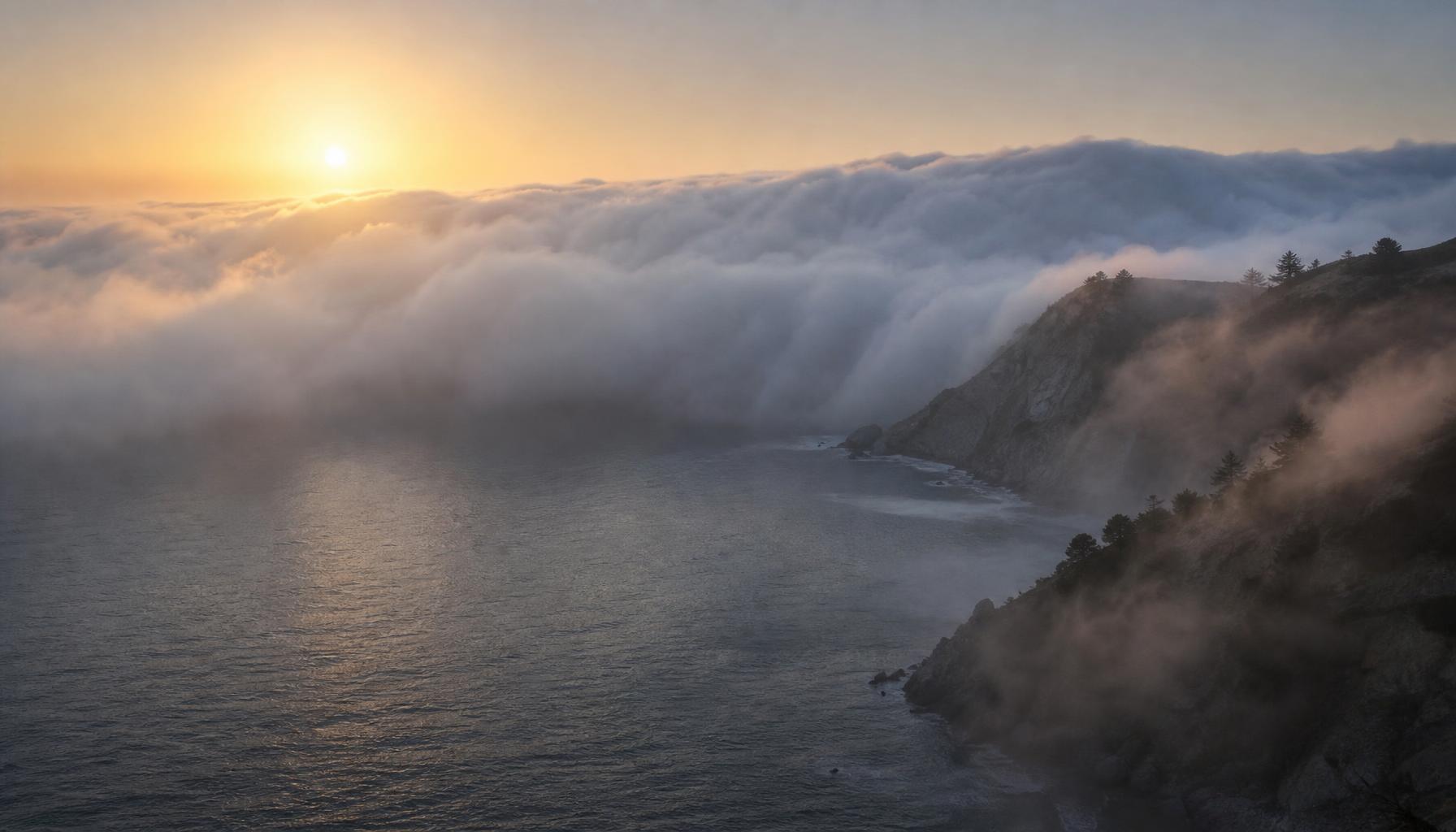
How does sea fog form? It usually forms as sea fog forms when warm, moist marine air moves over colder water. The air cools to its dew point temperature, water vapour reaches saturation, and tiny droplets form in the boundary layer near the sea surface.
Key takeaways
- The Bureau of Meteorology is the main source for checking Australian coastal warnings about reduced visibility.
- The East Australian Current can cause this type of advection fog when its warm waters meet cooler inshore patches.
- Condensation nuclei, including hygroscopic particles from sea spray, help droplets form.
- Sea fog can last longer than radiation fog because the sea surface changes temperature more slowly than land.
- Places with strong sea surface temperature contrasts, including Bass Strait and the Great Barrier Reef lagoon, can see fog at times.
How does sea fog form?
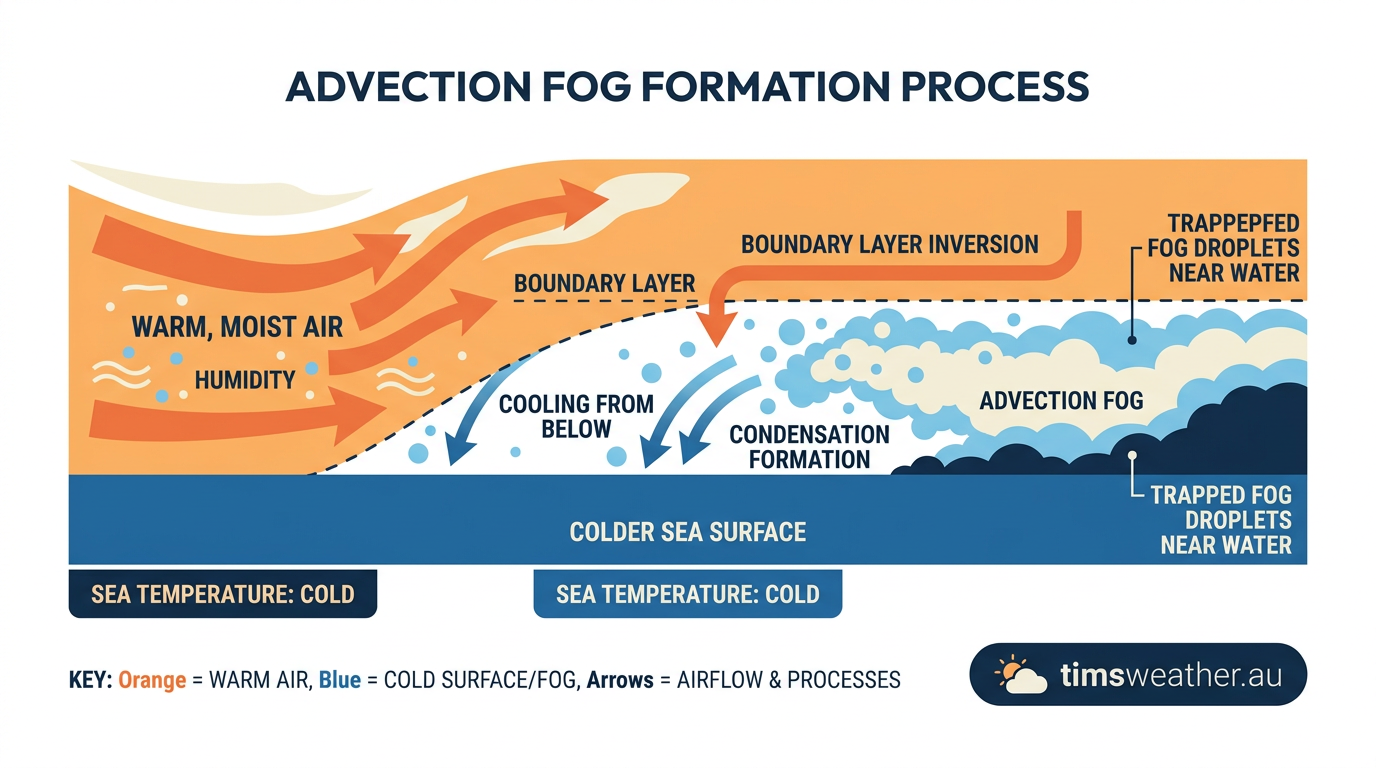
Sea fog forms when warm, moist air moves across cooler water. As the air passes over the colder sea surface, the lowest part of the air mass cools from below. Once it reaches the dew point temperature, water vapour condenses into tiny droplets and a fog layer develops. Fog is a cloud at ground level, and visibility can drop quickly. For Australian coastal warnings, the Bureau of Meteorology (BOM) is the main source to check.
What is advection fog?
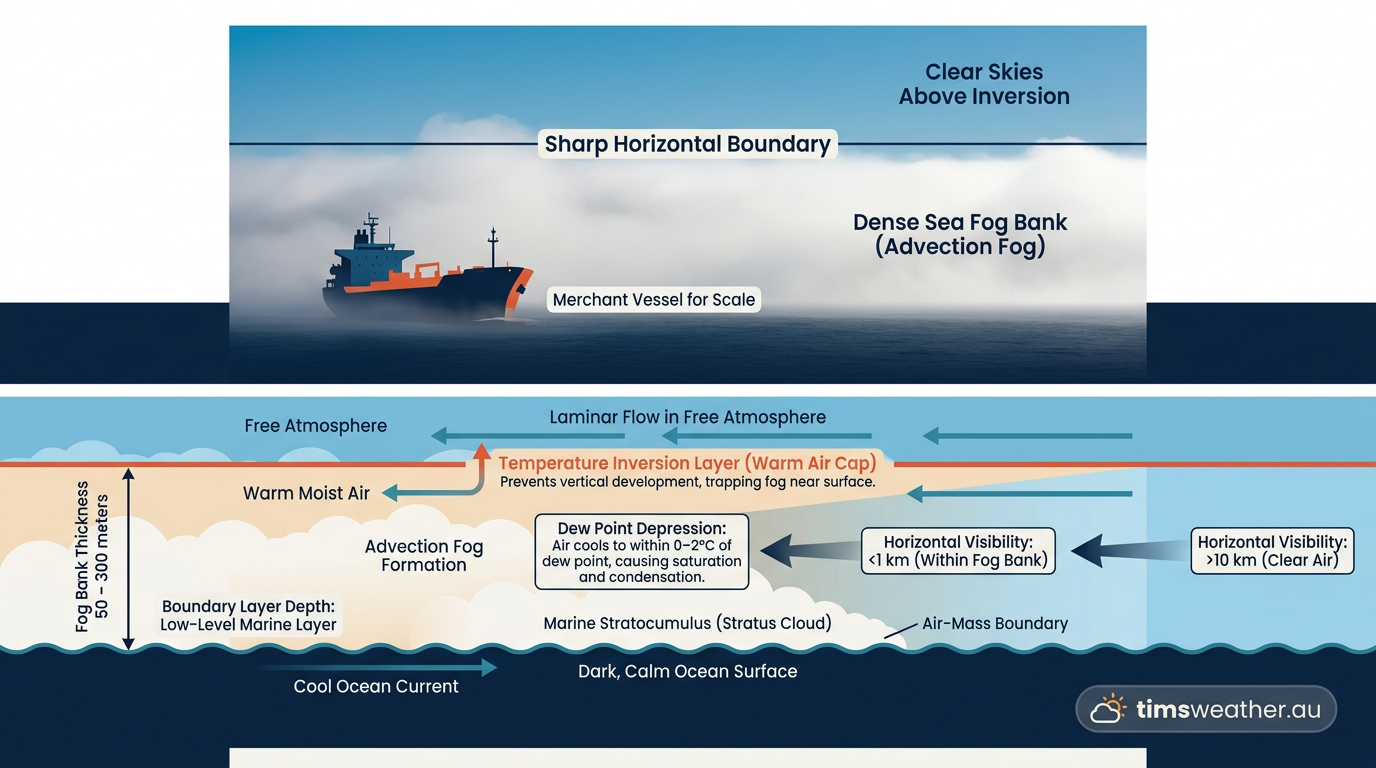
Advection fog is the type of fog that forms when air is moved horizontally over a colder surface. That surface can be the ocean, a cold bay, or cool inshore water. This is why sea fog can spread over wide areas instead of staying in one spot. You can also read more in our advection fog guide.
Dew point temperature and water vapour saturation
The dew point temperature is the point at which air becomes saturated with moisture. If the sea surface temperature is lower than the air temperature, the air cools until it can no longer hold all its water vapour. At that point, water vapour saturation is reached and condensation begins. For a simple backgrounder, see our dew point vs humidity guide.
Condensation nuclei and hygroscopic particles
Water vapour does not turn into fog droplets in empty air. It needs condensation nuclei, which are tiny particles suspended in the air. Over the ocean, many of these are hygroscopic particles from sea spray and salt. They give moisture a surface to condense onto, so droplets can grow fast enough to become fog.
The boundary layer and stable air
Sea fog usually sits in the boundary layer, the lowest part of the atmosphere. If that layer stays stable, the fog can linger because the air above does not mix down easily. A stable marine air mass can stay cool and damp near the surface for hours or even longer.
| Feature | Sea fog | Radiation fog |
|---|---|---|
| Main cause | Warm air moving over colder water | Ground cooling overnight |
| Common setting | Coasts and open water | Inland valleys and flat ground |
| Wind | Often light to moderate | Usually calm or near calm |
| How long it lasts | Can persist longer if cold water stays in place | Often lifts after sunrise |
The Role of the East Australian Current in Coastal Fog Events
The East Australian Current moves warm water south along the Queensland and New South Wales coast. By itself, that current does not make fog. What matters is the contrast between the warm current, the sea surface temperature nearby, and the air arriving over it. If that air moves over cooler inshore water or a colder patch nearby, sea fog can form. The same basic process can matter in waters such as the Great Barrier Reef lagoon and Bass Strait, where water temperature contrasts can affect visibility.
Why sea fog persists longer than radiation fog
Sea fog often lasts longer than radiation fog because the ocean changes temperature more slowly than land. That thermal inertia helps keep the sea surface cool enough, or warm enough, to keep the air near saturation. As long as the wind continues to move moist air over the colder water, the fog can keep reforming. By contrast, radiation fog usually fades after sunrise once the ground warms and mixing increases.
For Australian coastal waters, the Bureau of Meteorology (BOM) marine forecast is the best place to check for visibility changes and warnings before you head out.
When sea fog is most likely
Sea fog is most likely when three things line up: moist air, cooler water, and steady onshore flow. That combination is common along parts of the coast when winds bring a marine air mass over colder water. If you are boating, fishing, or working offshore, keep an eye on the BOM forecast and local visibility reports.
- Check whether warm, moist air is moving over colder water.
- Look for a stable boundary layer with light to moderate winds.
- Watch for falling visibility early in the morning or overnight.
- Plan for the fog to return if the same air mass stays in place.
Related guides
Frequently asked questions
Sea fog forms when warm, moist air moves horizontally over a colder ocean surface. As the air cools to its dew point, water vapour condenses into tiny liquid droplets. This process, known as advection, creates thick fog banks that can persist for long periods over the marine boundary layer.
Source: britannica.com
Further reading and resources
Explore trusted articles, books, videos and other resources to go deeper on this topic.
britannica.comReference
Advection fog | meteorology
Background reference on How Does Sea Fog Form? The Science of Marine Advection Fog from britannica.com.
education.nationalgeographic.orgArticle
Fog
In-depth coverage on How Does Sea Fog Form? The Science of Marine Advection Fog from education.nationalgeographic.org.
youtube.comVideo
Different Types of Fog & and How Fog Forms - For Student Pilots
Video coverage on How Does Sea Fog Form? The Science of Marine Advection Fog from youtube.com.
en.wikipedia.orgReference
Fog
Background reference on How Does Sea Fog Form? The Science of Marine Advection Fog from en.wikipedia.org.
weather.govReference
How Fog Forms
Background reference on How Does Sea Fog Form? The Science of Marine Advection Fog from weather.gov.
weather.metoffice.gov.ukReference
What is fog?
Background reference on How Does Sea Fog Form? The Science of Marine Advection Fog from weather.metoffice.gov.uk.
Fog Over Water
Background reference on How Does Sea Fog Form? The Science of Marine Advection Fog from weather.gov.
A. Fog Types
Background reference on How Does Sea Fog Form? The Science of Marine Advection Fog from weather.gov.
climavision.comArticle
5 Types of Fog and How They Form
In-depth coverage on How Does Sea Fog Form? The Science of Marine Advection Fog from climavision.com.
gulfcoastnewsnow.comArticle
Demonstrating sea fog formation - WBBH
In-depth coverage on How Does Sea Fog Form? The Science of Marine Advection Fog from gulfcoastnewsnow.com.
Planning weeks ahead?
Check Australia's long-range seasonal outlook for rainfall, temperature and the climate drivers (ENSO, IOD, SAM, MJO) shaping the next three months.
View Australia's Seasonal Weather Forecast